The Sweet Pea (Lathyrus odoratus) is native to Sicily and was introduced to cultivation around 1699. The genus Lathyrus has evolved so that each flower self-pollinates two days before it is fully open, making it nearly impossible for species to hybridise naturally. As a result, the sweet pea has relied on spontaneous mutations for new characteristics. Most garden plants, by contrast, owe their diversity to hybrids between species of the same genus.
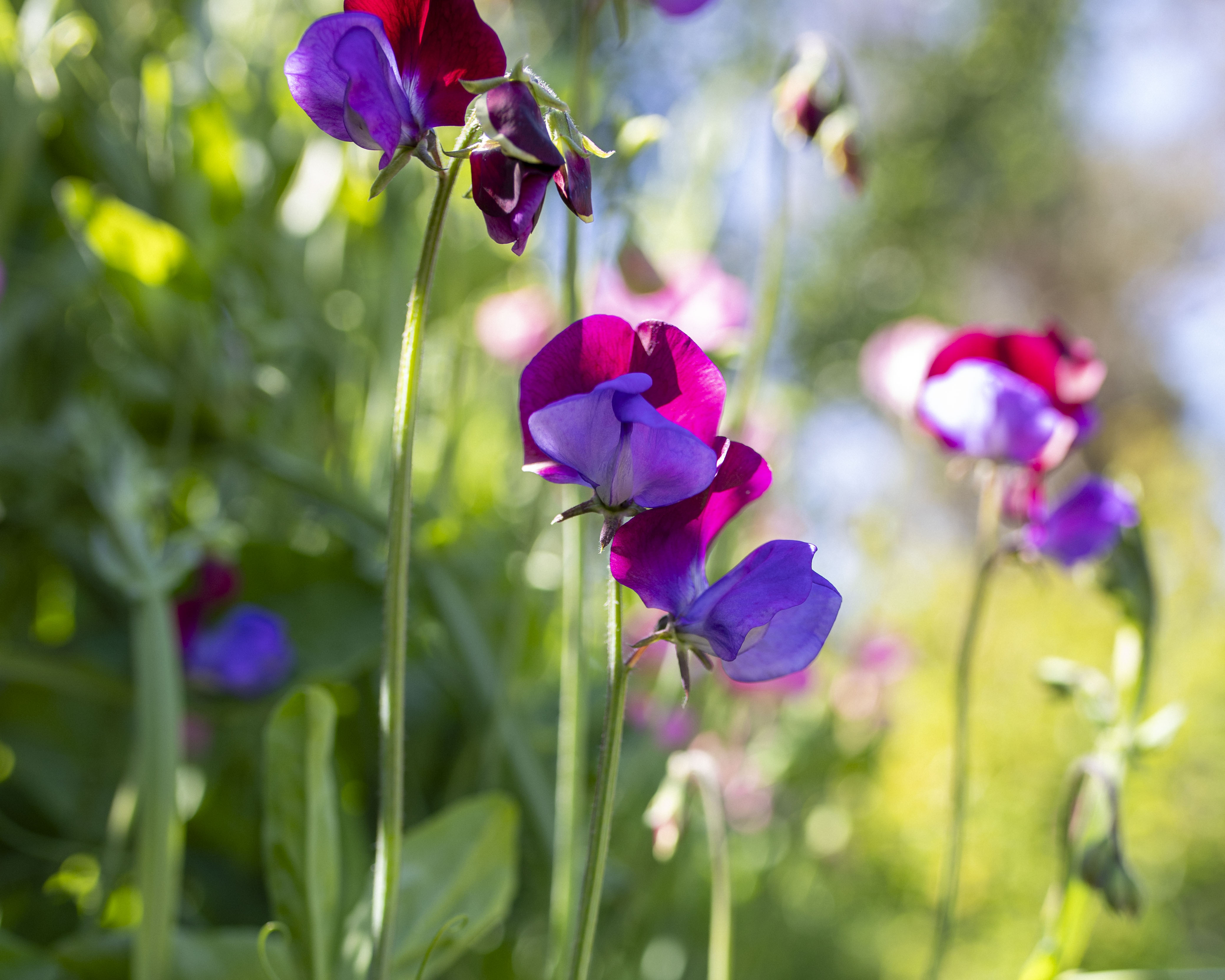
The wild sweet pea has flowers with a maroon standard petal and violet wing petals. An early mutation switched off the blue gene, creating the red-and-white ‘Painted Lady’, the first named cultivar.
It was not until the late 19th century that enough variants existed for breeders to begin systematic improvement. Their initial goals were larger flowers and a greater range of colours. Cultivars with bigger blooms were termed Grandifloras.
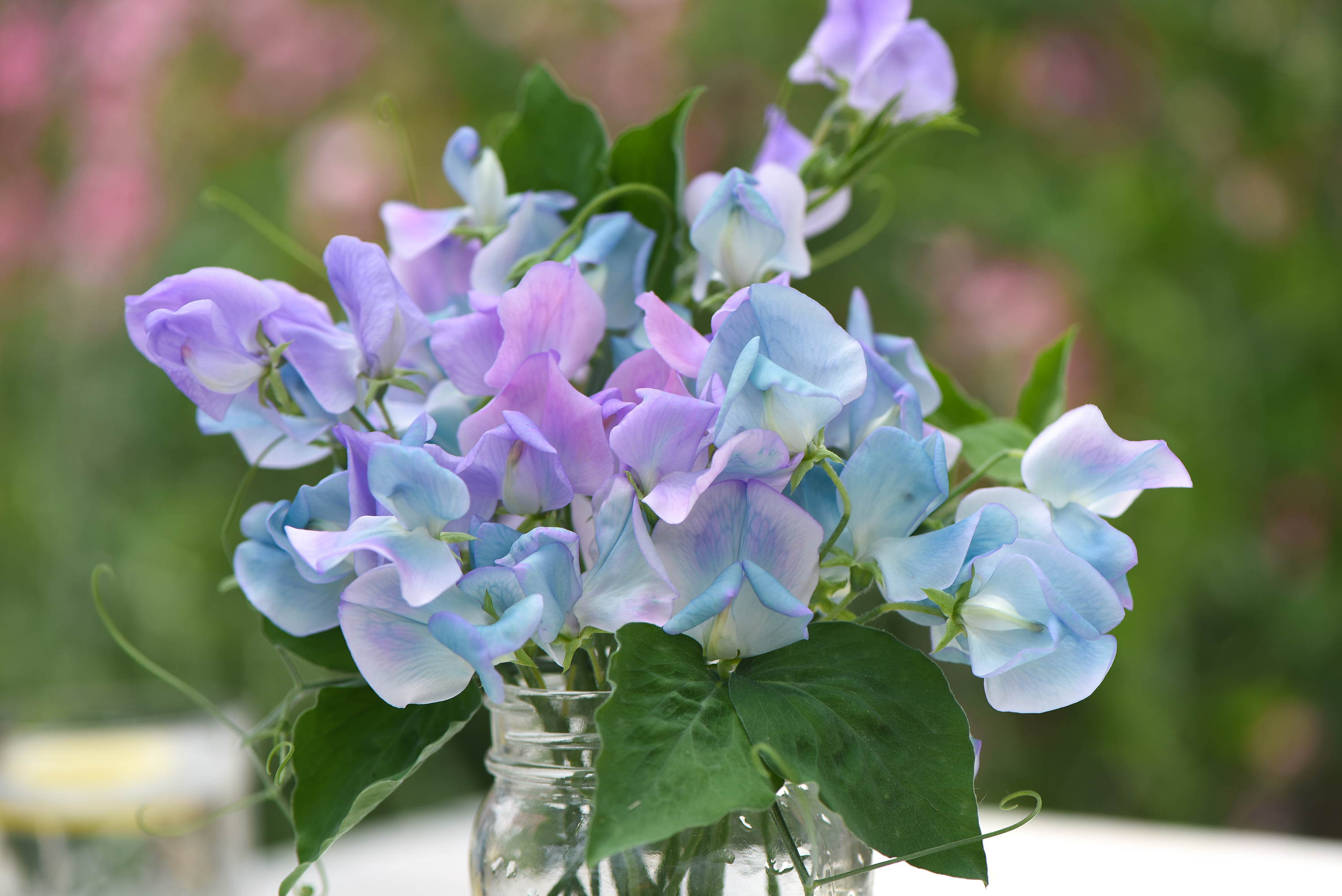
The most significant sweet pea mutation arose around 1900: the Spencer flower form. Here, petals became larger and frilly, creating a new standard of beauty. The introduction of Spencers sparked excitement comparable to Holland’s 17th-century Tulipomania, but on a global scale. While flower size increased dramatically, it was at this point that it was considered that scent was being lost – a trade-off many gardeners still consider when choosing varieties.
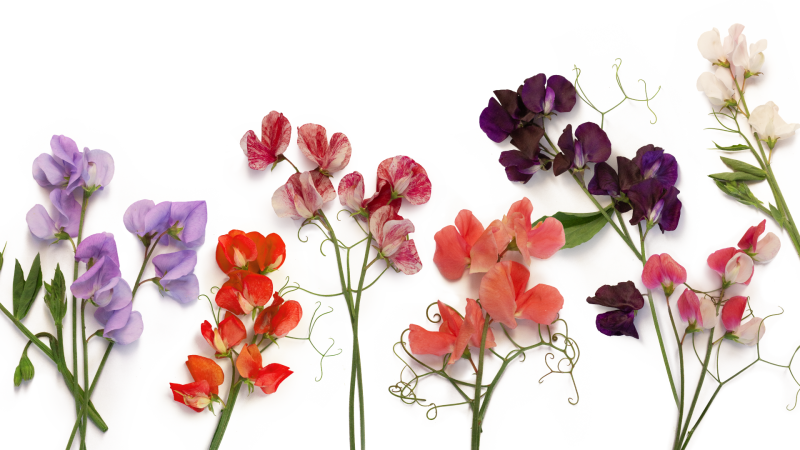
In 1914, Arthur Yates documented the development of the Yarrawa strain in Sydney, originating from a mutation in James Young’s garden. Yates purchased all the seeds and developed ‘upwards of 30 distinct colours’.
From Yarrawa, being a winter-flowering type that was important in the development of these types internationally, many strains were cultivated both in Australia and the USA. Some, like the Gawler strain, still exist in South Australia today.
What is often overlooked is that sweet pea strains have been developed to flower at different times of the year. The wild Sicilian sweet pea requires over 12 hours of daylight to bloom, a trait retained in most varieties. Early last century, plants that could flower with only 10 hours of daylight were identified in countries as diverse as Algeria, the USA and Australia. These winter-flowering types are sown in late summer in the Southern Hemisphere. Summer-flowering types, in contrast, are sown in autumn in cold-winter areas. These plants grow slowly through winter, producing strong basal shoots that create bushy growth, unlike the tall, spindly winter types.
Timing is critical: if summer-flowering types are sown in mild-winter regions, they may grow continuously until days are long enough to flower, producing very tall plants. Sowing too late can delay flowering until the following summer.
Early-flowering sweet peas are particularly important in Australia, where heat can limit blooms. Spring-flowering types, developed over a century ago, will flower with eleven hours of daylight. They allow home gardeners to enjoy blooms from late winter, giving rise to the tradition of sowing sweet peas on St Patrick’s Day, 17 March. In colder countries, such as Japan, early-flowering varieties are grown in greenhouses to supply cut flowers in winter. Spring types often resemble summer types in habit but flower much earlier. Winter types, sown later (May to July), develop strong single-stem plants. By adjusting flowering responses and sowing times, sweet peas can provide blooms almost year-round.
Exhibitors have long gone to great lengths to produce show-quality blooms, creating the perception that sweet peas are difficult to grow. In reality, they are quite easy. Sweet peas prefer well-drained soil in full sun and can also thrive in large pots. A light dressing of balanced fertiliser at planting is all that’s required.
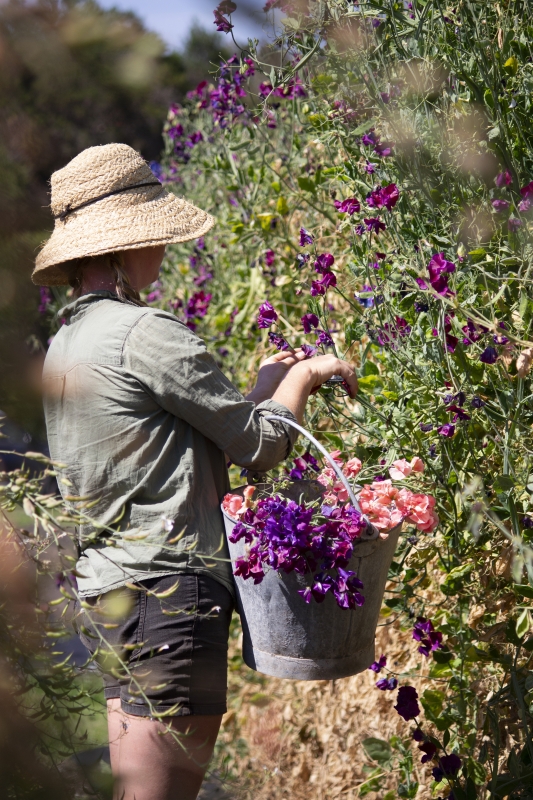
Seeds can be sown directly where they will flower if pests like slugs, snails, or birds can be managed. If sowing in pots to transplant later, avoid greenhouses – place them outside in full light when sown. Most plants will need support: netting against a fence or wall works well, as does a simple tepee of tall bamboo canes. Sweet peas climb with tendrils but may need a little help at the start. Once flowering, cut blooms regularly and remove any seed pods to prolong flowering. Sweet peas suffer from few diseases, though powdery mildew can occasionally be a problem. Spraying fungicide at the first sign of mildew can keep it under control.
To save seeds, allow pods to ripen fully on the plant, then harvest and store them in a cool, dry place. Sweet Pea seeds remain viable for several years and can be sown directly or started in pots for future planting out into the garden. Even a few plants will provide a bounty of blooms.
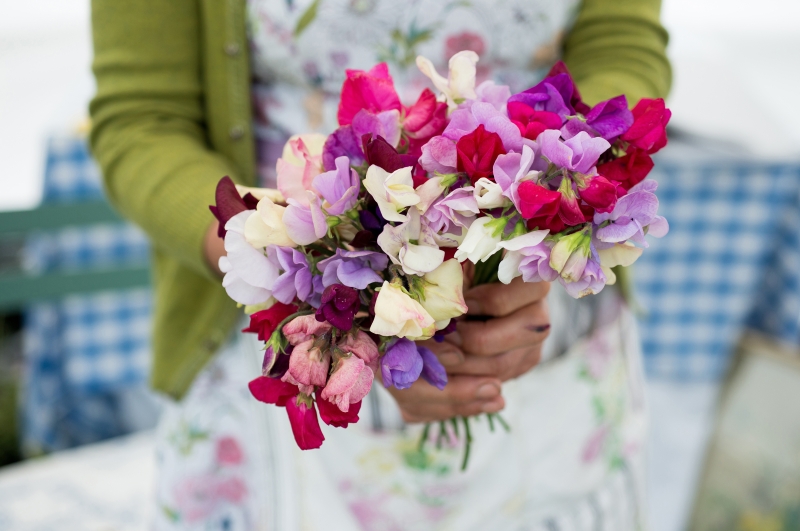
No gift elicits more gratitude than a bunch of delightfully scented sweet peas, the ultimate cut-and-come-again flower.