

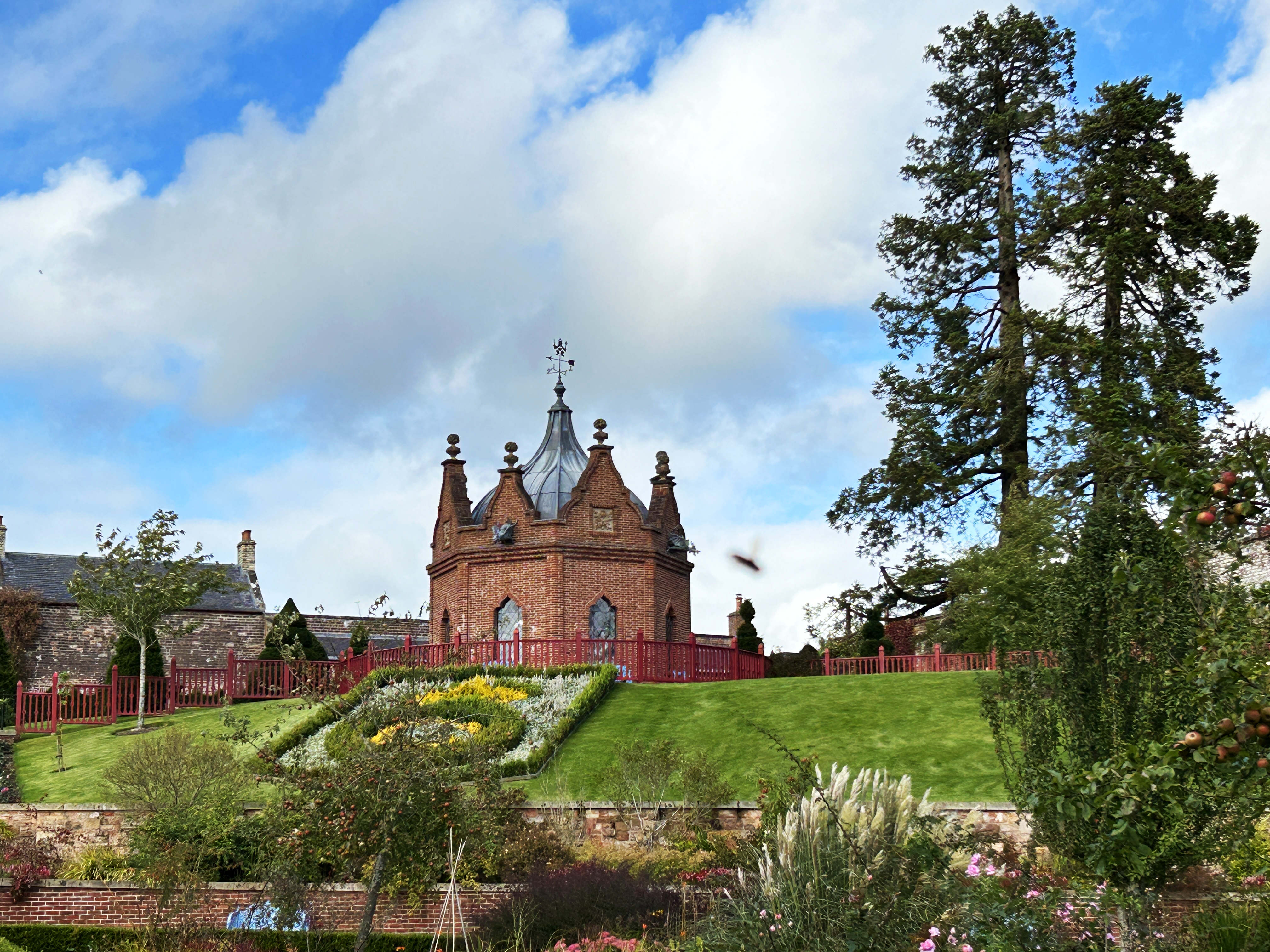
Most people, in the UK at least, will be aware of Dumfries House and how Prince Charles (now His Majesty King Charles III) intervened at the last moment in 2007 to save the property, its priceless collection of Chippendale furniture and art for the nation. Fortunately, his intervention also saved the estate and walled garden, which had been allowed to fall into a sad state of neglect.
I first encountered Dumfries House when I was a horticultural student. I had heard of some fine trees and especially the giant redwoods (Sequoiadendron giganteum), which were growing in the grounds. I loved sneaking into the overgrown estate to admire these magnificent specimens. I never thought that, some 30 years later, I would be visiting the same grounds and enjoying the wonderful gardens that have been created.
Dumfries House is located in East Ayrshire, Scotland, which was once an industrial powerhouse with coal mining and textile production at its heart. Sadly, the decline of these industries has led to significant economic and social hardship for many of the local population.
Dumfries House is now the second largest employer in East Ayrshire and was named as the RHS Partner Garden of the Year for 2025. The Dumfries House project could be described as one of the leading heritage restoration, conservation, rejuvenation and educational projects in the UK. Most importantly, it has been undertaken in a way that has benefited the local communities, creating new training and employment opportunities for people from these communities and beyond.
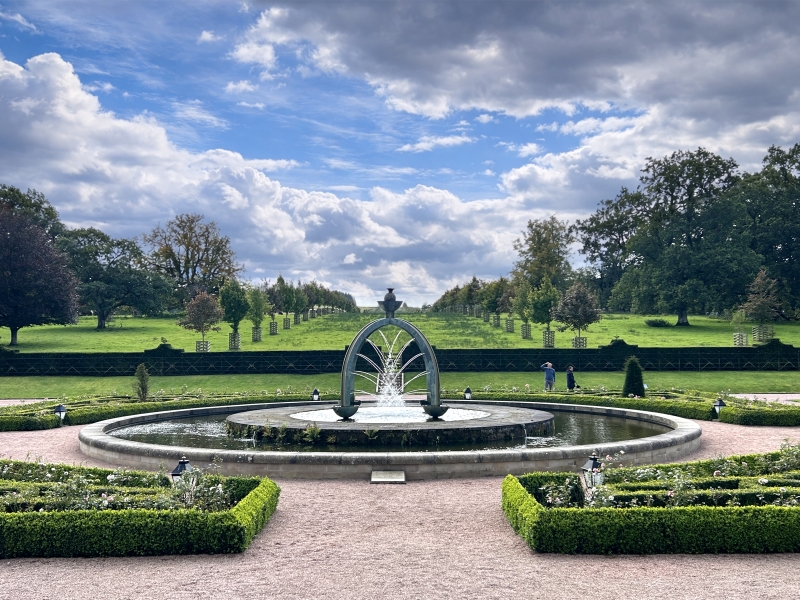
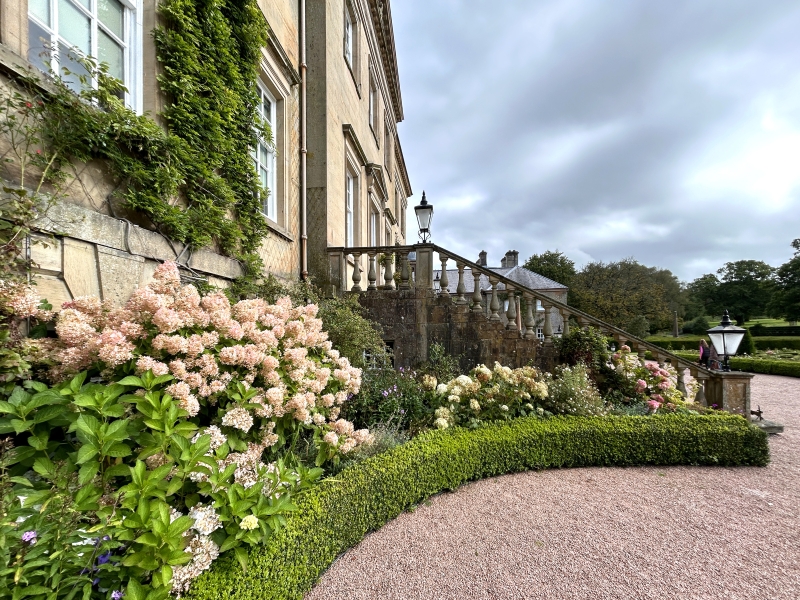
Landscape designer Michael Innes was appointed by Prince Charles to create the masterplan for the gardens and estate. A formal symmetrical garden was created to complement the grandeur of the mansion. A William Pye water feature, ‘The Pergola’, crowned with a bronze thistle, anchors the garden, creating interest through its water flow and spouts. Formal parterres filled with roses add structure and colour, with mirrored borders adding further symmetry to the design. There are many beautiful specimens of mature trees, including beech (Fagus sylvatica), giant redwoods (Sequoiadendron giganteum) and cedars (Cedrus atlantica ‘Glauca’) throughout the estate, with many new trees being planted to create seasonal interest.
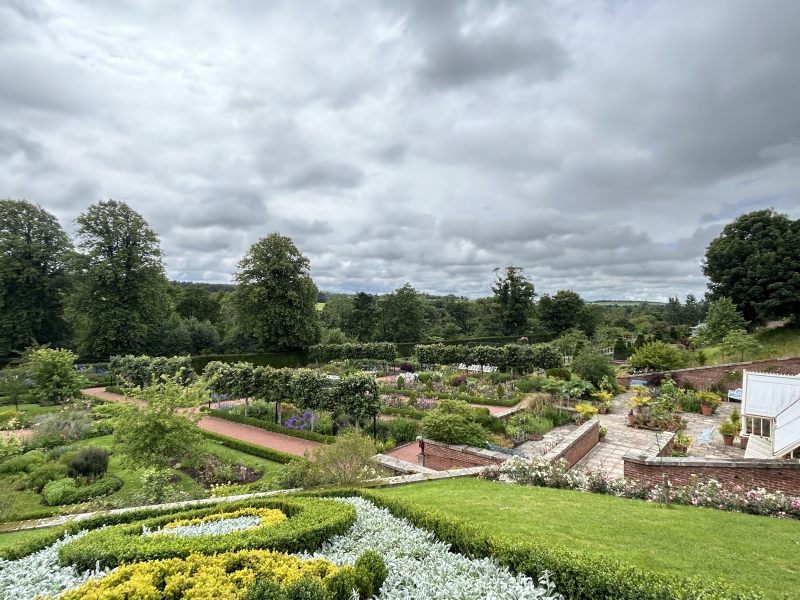
The Queen Elizabeth walled garden is described as the ‘flagship project’ of the Dumfries House Estate restoration. The five-acre walled garden had fallen into disrepair with crumbling walls, overgrown scrub and was used to house sheep! An exciting plan to restore and reinvent it saw walls repaired and the garden, with its 11-metre difference in level from top to bottom, terraced to create beds, borders and parterres.
The garden, opened by HM Queen Elizabeth on July 2nd 2014, is now over 10 years old and is constantly evolving. In early summer, you are met by a striking display of delphiniums, being one of the King’s favourite flowers, transitioning in late summer to a multi-coloured display of old-fashioned phloxes (asters).
The rest of the beds and borders overflow with colour and interest throughout the year, with bulbs used for seasonal impact. The new rose beds give summer colour with the added benefit of delightful perfume. The parterres, hedges and topiary bring structure and character year-round. Then there are the fruit and vegetables grown alongside flowers, later harvested for the restaurants and cafés on the estate.
Visitors cannot help but find inspiration for their own gardens. It is reassuring to find here the same problems, pests, diseases and weeds in our own backyards. Environmentally sustainable practices are being used to deal with these problems, proving you don’t have to fight nature to have a beautiful garden.
Part of the walled garden, but separated by a hedge, is the Kauffman Educational Garden. It’s in this garden that the most important work happens: educational hands-on gardening for school children, inspiring the next generation of gardeners. In this certified organic garden, children learn about food production, the importance of soil, through to cooking what’s grown. Children are our future; it’s wonderful to see them learning about plants and nature. We need to grow our children as well as plants!
There are many gardens at Dumfries House, from the newly planted arboretum, the lovely, calming streamside woodland walk with ferns, astilbes, hostas, hellebores and rhododendrons and an enchanting maze with four obelisks and a Japanese-style tearoom.
The Estate is managed by the King’s Foundation and has a team of passionate gardeners and volunteers who are always willing to share their knowledge. Gardens must never stand still or they will go backwards. Dumfries House is a garden that marches confidently forward and inspires all who visit.