

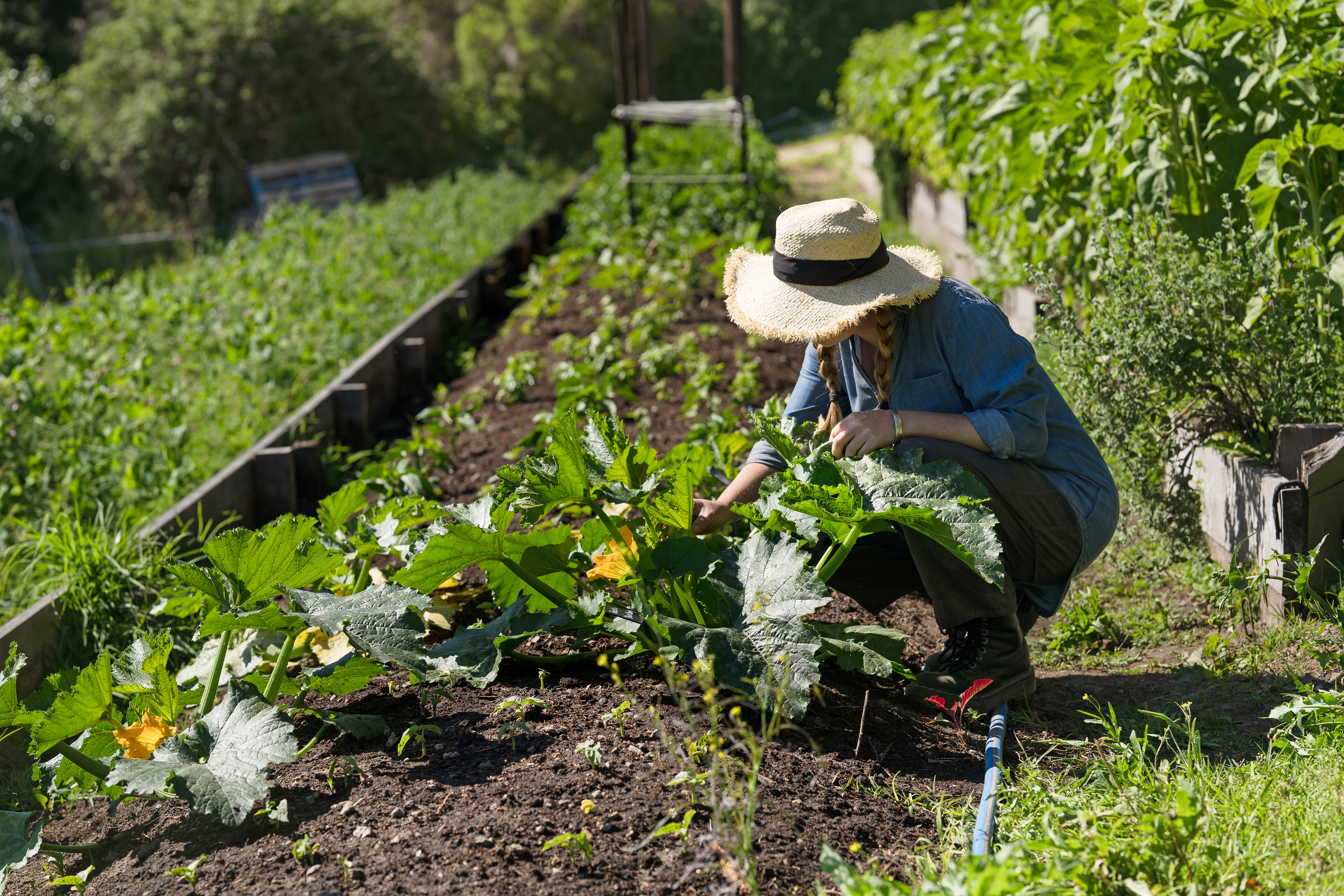
In my early years at Diggers, I remember visiting Heronswood and wandering around the kitchen garden. The terraced hillside adjoining the old café building was always brimming with heirloom vegetables, flowers and herbs. Gardeners tended the crops, trialling new varieties, saving seed and growing fresh, organic produce for the fork-to-fork café.
Over a decade later, the site lay abandoned. The loss of the old café building to fire, COVID lockdowns and other garden priorities meant that the kitchen garden was largely forgotten. A new garden shop now stands where the café once was and the kitchen garden terraces were a mess of kikuyu, couch and running grasses growing vigorously on the once-fertile vegetable beds.
We knew that rebuilding the garden would be a difficult task, but the gardeners were determined to bring vegetable gardens back to Heronswood, for our visitors to enjoy and to once again grow fresh produce for the Heronswood café.
Our passion for growing heirloom vegies remained, and with a new generation of gardeners learning their craft, an organic vegetable garden was considered essential to educate our future gardeners.
The beautiful heirloom varieties we grow are some of the most highly cultured plants; grown for many centuries in the most fertile cultivated gardens, requiring intensive and specialised horticultural practices. Techniques and skills learned in the vegetable garden form the foundation of gardening knowledge, which gardeners can then use whether growing flowers, food or trees.
To begin, there was a clear decision to be made, though we know it can be a challenging one for many gardeners.
Faced with the choice between using herbicides and harsh chemicals or removing weeds mechanically, the lure of quick, spray-on solutions is tempting. However, staying true to the Diggers ethos, poisoning a garden – especially one that grows fresh food – was never an option.
So, we set about removing the top few centimetres of soil and weeds, stacking them in a long-term compost heap to decompose and turn back into topsoil when the last of the weeds have rotted down. The gardeners then meticulously cultivated the soil, removing any remnants of weedy grasses, digging out paths and adding compost to the most promising beds. The soil beneath was surprisingly fertile, dark with organic matter, full of worms and easy to work – a testament to the work of our Diggers’ gardeners many years before and an indication that soil, once improved, remains fertile when left undisturbed.
Areas with the best soil and good soil depth have been planted with a cornucopia of heirloom vegetables for the first time in many years. Tomatoes, chillies, sweet corn, carrots, beetroot and many others are growing vigorously in the newly improved garden beds as we diligently weed, cultivate and fertilise between the rows. Trailing vegetables like melons, cucumber and pumpkins are interplanted with taller crops such as corn and tomatoes to make the best use of space and cover the soil as quickly as possible. Gaps between plantings are often filled with dwarf bean seeds or other fast-growing vegetables to quickly shade the soil.
Areas with less topsoil, which were not quite ready for demanding vegetable crops, were sown with cover crops, both as a way to prevent weed regrowth and to add bulk organic matter, building the topsoil and preparing the land for future vegetable production.
Sunflowers were broadcast in the top terrace to provide a beautiful backdrop to the vegetables and because their strong root systems penetrate compacted soils. They add organic matter underground through their root systems and above the soil with their bulky stems. After flowering, they will be composted or dug straight back into the soil to decompose.
In other beds, a selection of legumes was chosen as a green manure crop as legumes provide both nitrogen and carbon to the soil, rapidly bringing it back into good condition. Field peas and lupins were sown in mid-spring and quickly covered the garden bed, sending their strong roots deep into the soil. As the legumes flower, nitrogen is taken from the air and fixed into nodules on their root systems, providing free fertiliser for the crops that follow.
The flowering peas and legumes gave a colourful display, attracting butterflies and other beneficial insects. Even the most utilitarian of crops can bring beauty to the garden if selected carefully. Upon flowering, the green manure crops are chopped up and incorporated carefully back into the soil – perfect preparation for the next season’s crop of nutritious and delicious ‘fork to fork’ heirloom vegies.