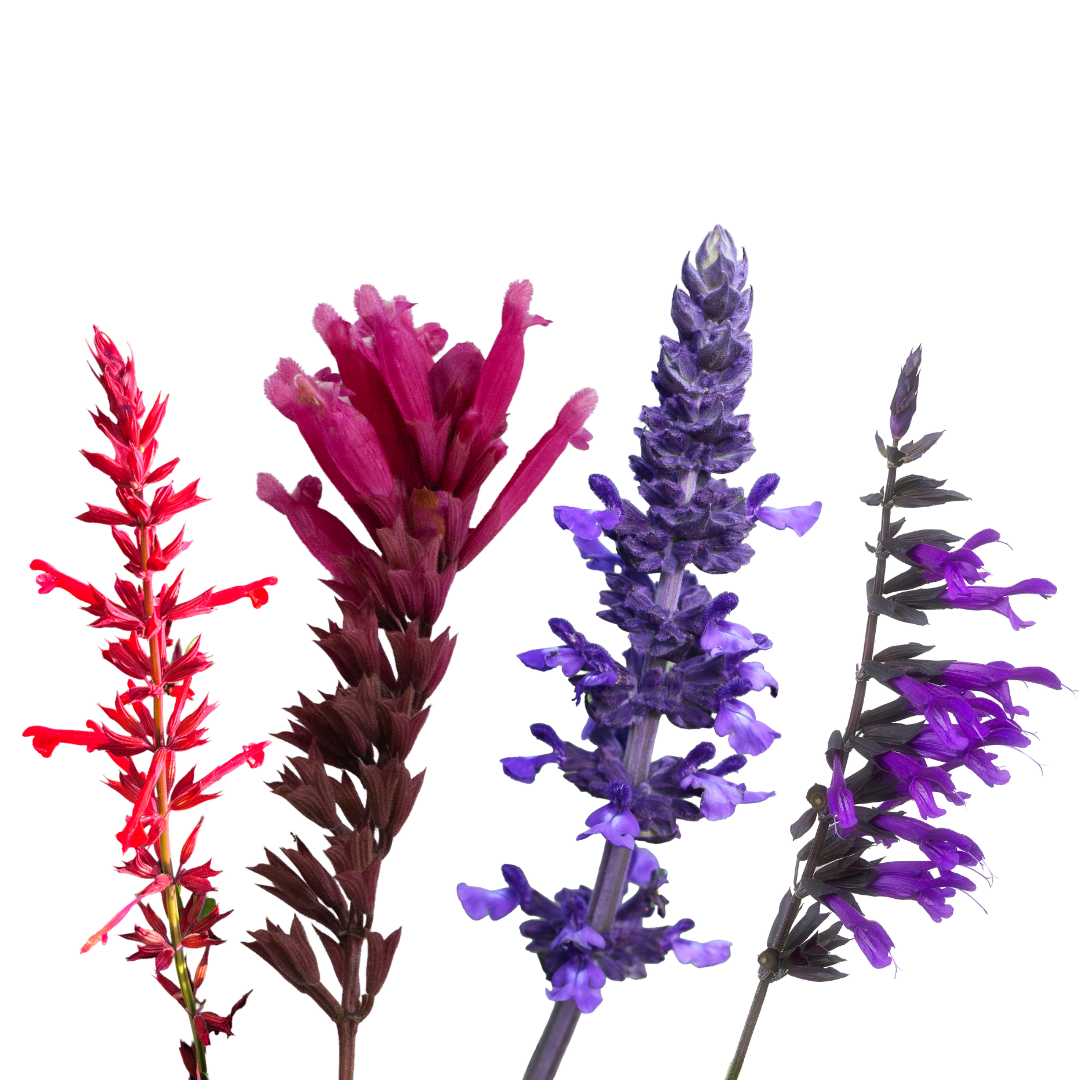
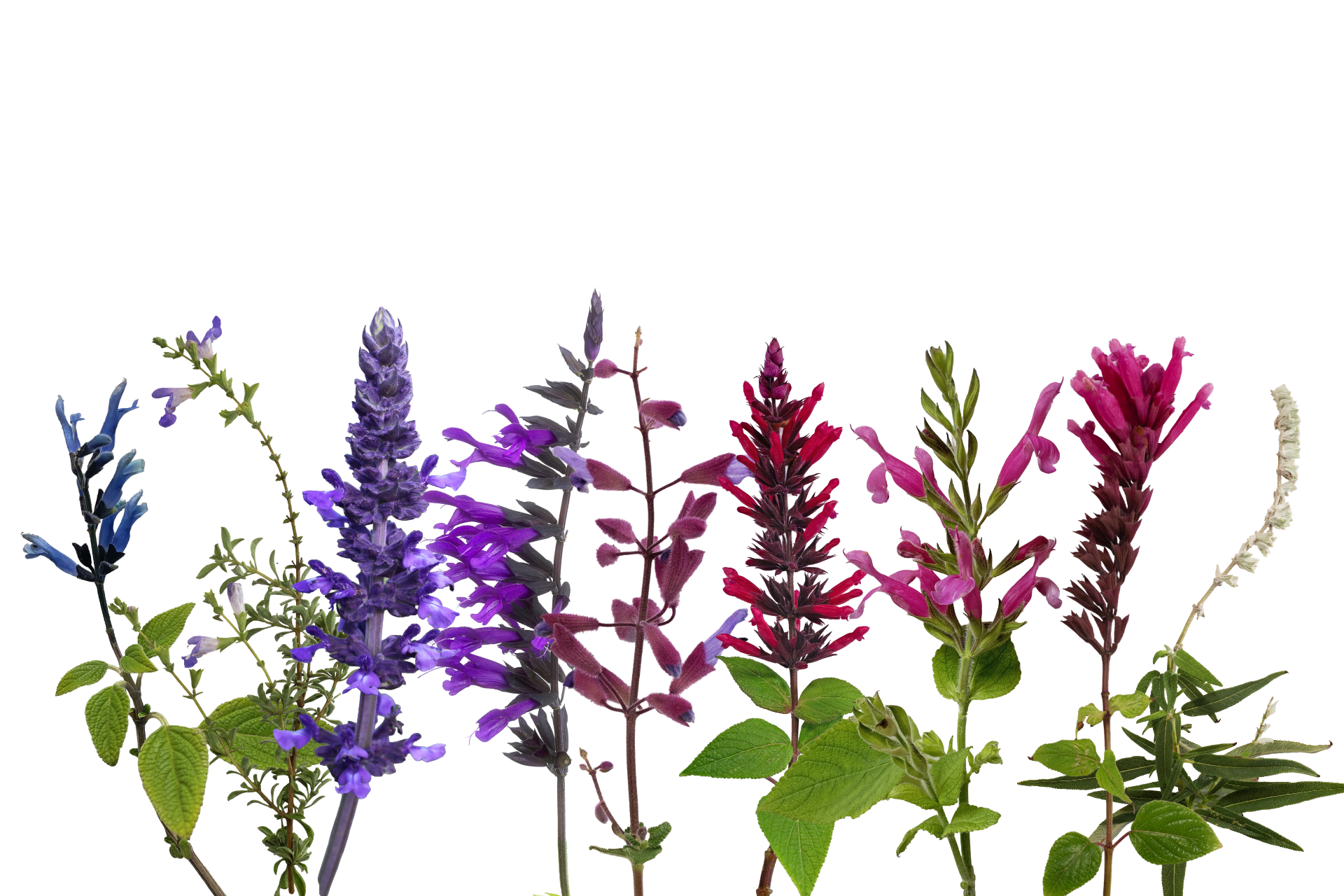
All flowers in the garden are joys from the heart, but none more so than salvias. They are a visual delight to gardeners and visitors alike, humankind or otherwise, being a tremendous asset to all the birds, bees and bugs essential for a biodiverse world.
All salvias bring birds and pollinators to the garden, with S. ‘Meigan’s Magic’ and the rare S. bullulata from Peru with its turquoise flowers being fantastic drawcards for honeyeaters. New Holland honeyeaters and Eastern spinebills seek out salvias during the winter months when other nectar-rich flowers are scarce. The smaller birds, like scrubwrens and fairy-wrens, love to nest amongst the salvia foliage in the garden, including in the tops of potted plants!
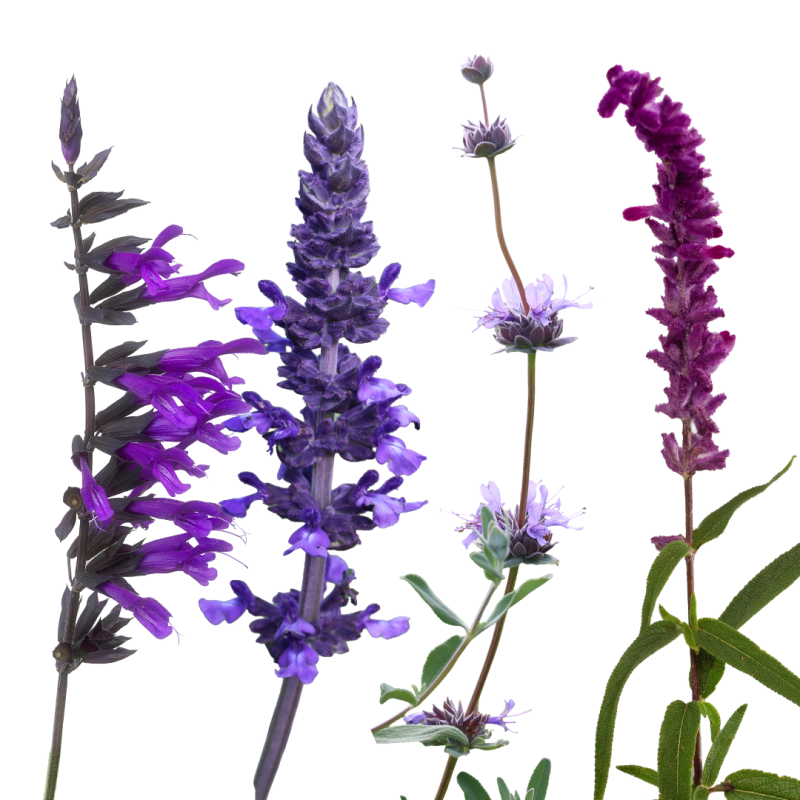
There are over 900 species of salvia found throughout the world, although none are native to Australia. They are mostly hardy plants (frost tolerant) and will take our harsh, dry conditions, especially those from the Mediterranean, Canary Islands, Southern Africa and North America (including Mexico).
I think the genus Salvia, in the Lamiaceae family, has the largest range of colourful flowers of any plant family. The exquisite, often edible flowers have varying corolla shapes: tubular, which include Pineapple Sage or S. elegans, S. ‘Costa Rica Blue’, S. involucrata and the Mexican Sage S. leucantha; short squat flowers, like culinary sage, S. officinalis, S. fruticosa and S. pratensis; and flat open-skirted lips, such as the many S. greggiis and microphyllas, good examples being S. ‘Silas Dyson’ and S. ‘Iced Lemon’.
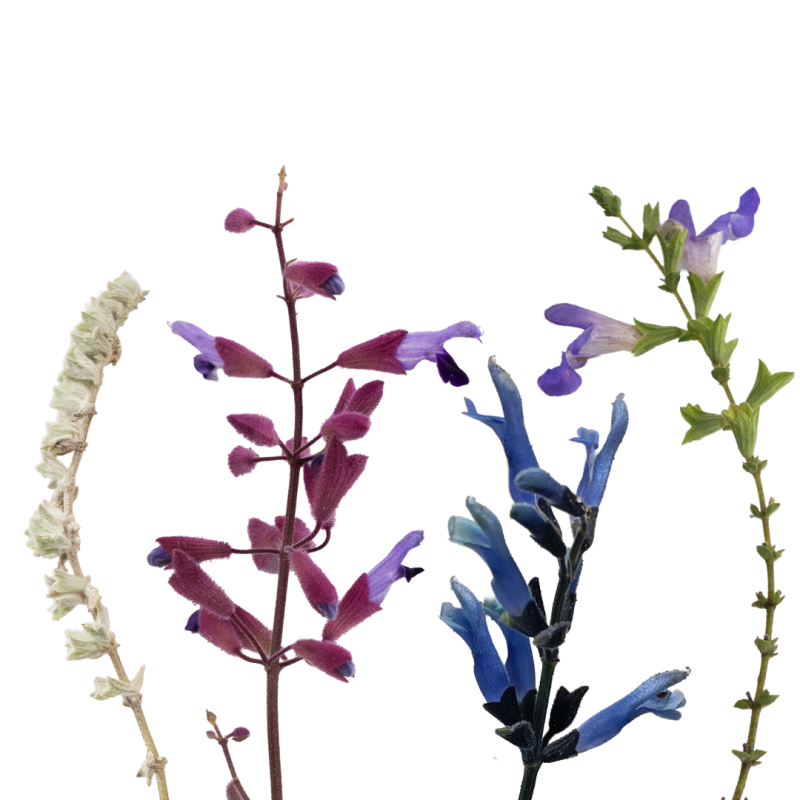
The name salvia comes from the Latin word salvere – to save, heal or be healthy. In ancient Rome, salvia was regarded as sacred due to its reputation as a medicinal herb.
Ancient Aztecs valued chia seeds from S. hispanica as a healthy, energising food, a custom that continues today in Mexico. It is widely valued worldwide, with chia seed regularly used in breads, smoothies and cooking. Australia’s Kimberley Region is one of the best producers of chia seed due to its distinctive wet and dry seasons.
There are many other salvias that adapt well to our dry climate and can be utilised in varying fields – culinary, medicinal and ornamental. For instance, S. aurea and S. runcinata have been used in South Africa as medicinal herbs for respiratory, digestive and skin disorders. S. miltiorrhiza and trijuga, prized for their roots, have been utilised as medicinal plants in China for generations. The seed of S. sclarea, from Europe, has been used to remove foreign matter from the eye, hence the common name Clear Eye or Clary Sage.
Culinary use of salvias is gaining in popularity. In baking, I love to use the winter-flowering Fruit Cup Sage, S. dorisiana. Arranging its fragrant leaves at the base of a cake tin before adding the mixture reveals a delightfully fragrant tea cake when baked. I make a syrup by combining the leaves of both S. dorisiana and S. elegans ‘Pineapple’ to pour over the cake. There are many ‘fruity’ fragrant salvia flowers that can be used in salads, fruit salads and drinks, and other sages that can be used in cooking, like all forms of S. officinalis as well as S. fruticosa.
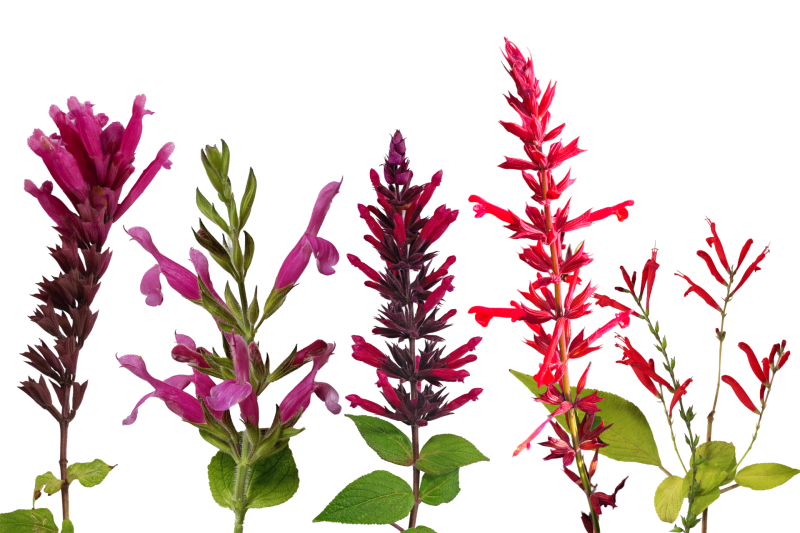
Salvias are adaptable and happy in most well-drained soils. Leaf size is a good indicator of sun or part shade requirements. Large, thin-textured leaves like part shade and the smaller, especially grey-leaved, salvias are happiest in full sun. Mulching is beneficial to retain moisture and planting deeper, like a tomato, helps to support the plant and encourage lower growth at the base.
Extend the flowering season by removing spent flower stems, then after flowering prune back to the lower green growth. Salvias can be propagated successfully by division during the cooler or dormant months – a simple and cost-effective way to spread the joy of salvias.