

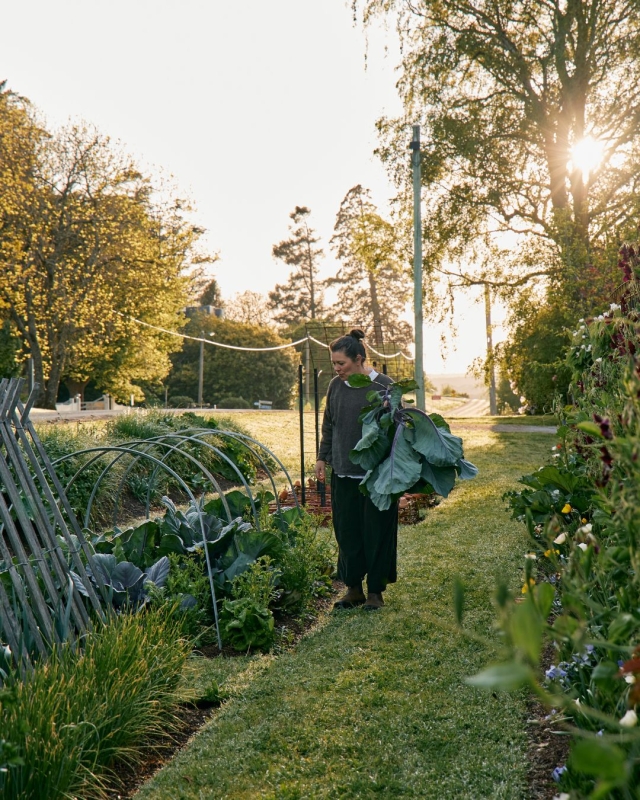
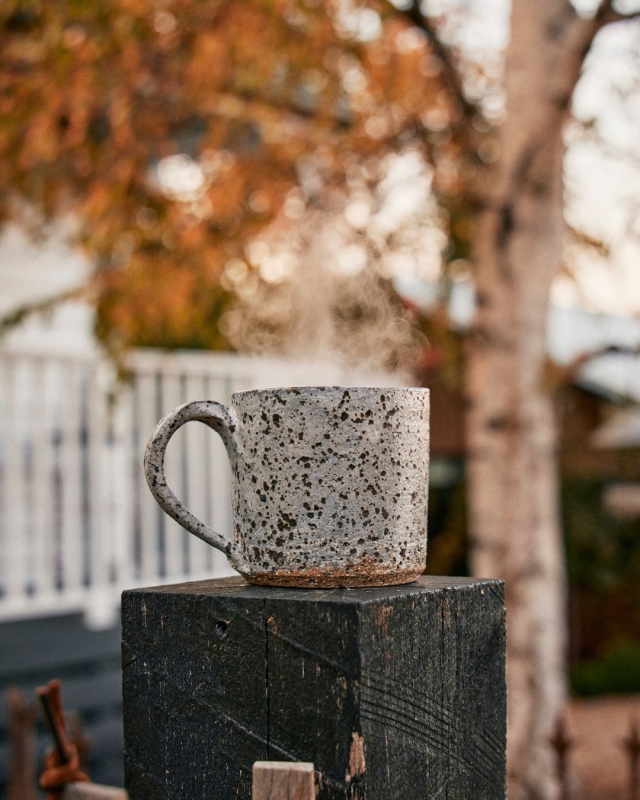
The tea comes with me. Most mornings, before anything else, I’m out the door with a cup in hand for a lap of the garden, however the day finds me. If you walk your dog early through Daylesford, you’ll probably catch me in my verge garden in my pyjamas. (I might even awkwardly wave!) The lap takes five minutes, sometimes two. Right now, in late winter, it’s full of little clues. Buds are swelling on bare wood and frost is sitting in the hollows. The buds probably won’t break for weeks, and every year the garden proves my guesses wrong in one direction or the other.
I’ve been doing some version of this walk my whole life. As a child, I spent time visiting the mini-plot garden at Heronswood, and what I remember is nose in the flowers, looking at what grew next to what, and how. Back at home, it was all about the poking: fingers in the soil, lifting pots to see what lived underneath. Children don’t audit a garden; they poke it. Observation is simply that curiosity, never grown out of. I’ve spent a lifetime in gardens, and twenty-plus years as a landscape architect before I ever wrote about them, and everything I know starts in the same place. Look first, then act.
Observation is a gardener’s greatest teacher. I believe there are no failures in the garden, only lessons, and the lessons land when we’re paying attention. When a sowing doesn’t come up, the garden is telling you something. Maybe the soil was still too cold. Maybe something else ate them first. Notice, adjust, sow again. A packet of seed holds dozens of chances, and every one of them is permission to have a go.
So as spring gathers, start the lap now and let curiosity lead it. When something looks off, go closer before you reach for a remedy. Rosemary gone yellow? Fingers into the soil first: is it dry or is it sodden? Stick your trowel in and see what’s going on beneath the surface. Turn the leaf over; the answer is often on the underside. Notice what has self-sown, too, because the garden is showing you where things might prefer to grow. And write things down, even roughly. A date scribbled on the back of an envelope, a photo of the same bed each week. By next spring, you’ll be reading your garden against its own record. My phone camera roll is its own kind of special garden journal when looked back on year after year.
Because Diggers members garden across this vast and diverse country, let your zone set your timing, but always start with observation before any strict date on a calendar. Growing up, the Diggers growing zone map on the back of every issue was one of my most useful tools, alongside slow garden wanders and plenty of curiosity, which was always rewarded with some new clue that spring was on its way.
Once you’ve observed, then sow, and in waves. In my Daylesford cold climate, the season is short, so I start summer crops early: pumpkins and zucchini in toilet rolls on a seed heat mat, the one tool that has transformed my seed germination. A warm, bright windowsill will do the same work. I sow hardy things direct once the soil warms, and I rarely empty a packet in one sitting – a pinch now, another a fortnight later, so no single cold snap or heatwave can take the lot, and the season can roll out in steady succession.
When I moved from Oak & Monkey Puzzle’s five acres in Spargo Creek to 515 square metres here at Little Cottage on a Hill in Daylesford, the small block sharpened my eye; nothing escapes the ‘lap’ now. Whatever your scale, a courtyard or a windowsill of seedlings, observation works just the same.
This is the thinking at the heart of my new book, The Productive Garden Companion, out this September. I wrote it as an invitation to walk alongside you, whatever ground you have and wherever you’re starting, and it begins exactly where this piece does: with noticing and acting on what you see.
This morning the lap took four minutes, and the tea was still warm at the end. I came inside knowing what my garden is doing and what it will ask of me next. Spring is close. Take your cup out tomorrow, in whatever you slept in, and walk your own lap. See what your garden is telling you. Then trust it enough to open a packet of seeds.
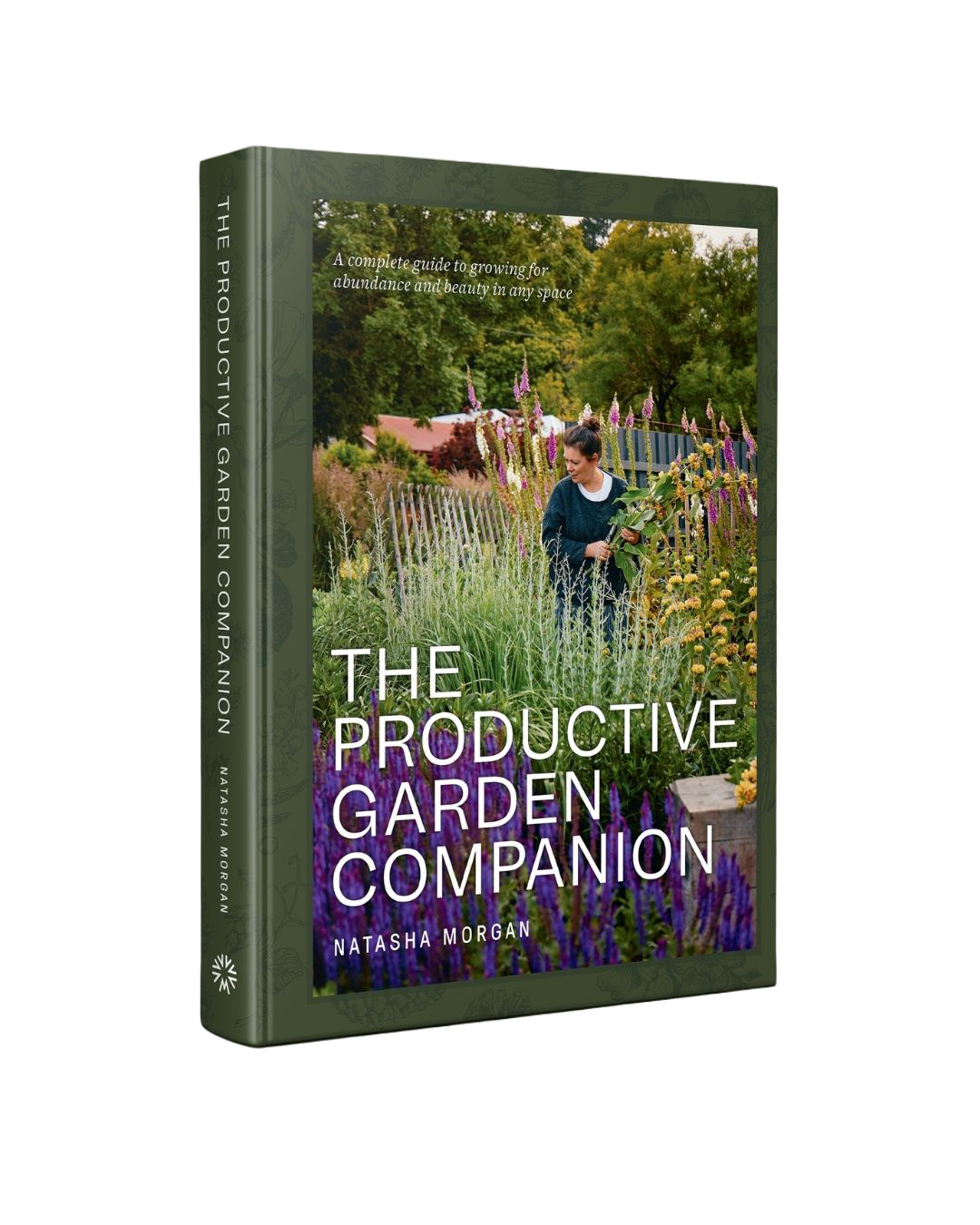
Join my book launch
I’m excited to be launching The Productive Garden Companion with Diggers this spring, across four wonderful events, including a homecoming to Heronswood where my gardening began as a child, plus Cloudehill, The Garden of St Erth and the Diggers shop at Adelaide Botanic Garden. These very special events are exclusive to Diggers and I’d love to see you there.
- Heronswood, Sat 17 Oct, 4pm–6pm
- Cloudehill, Sat 24 Oct, 11:30am–1:30pm
- The Garden of St Erth, Sun 25 Oct, 4pm–6pm
- Adelaide, Sat 14 Nov 3:30pm–5:30pm