

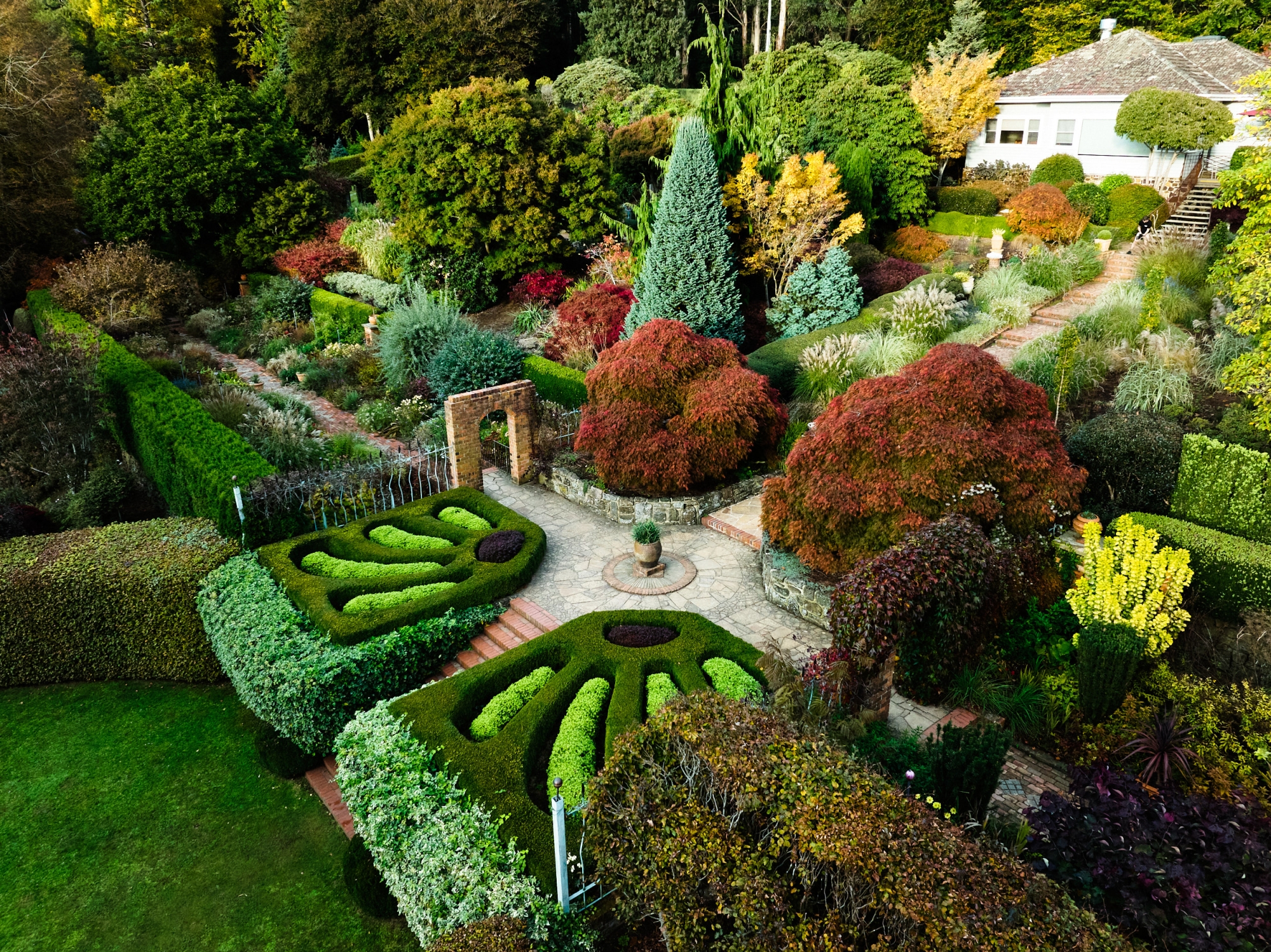
The quiet months of winter are probably the best time for planning in the garden. Walking around on a day with no flowers, just the beginnings of snowdrops nosing their way through the leaf litter, the structure of the garden becomes all important – the trees and shrubs defining the spaces. Every garden must have a range of spaces. Whether they are formally laid out ‘garden rooms’ or loose areas set out as a foreground to magnificent ‘borrowed scenery’ really does not matter. What matters is variety and contrast.
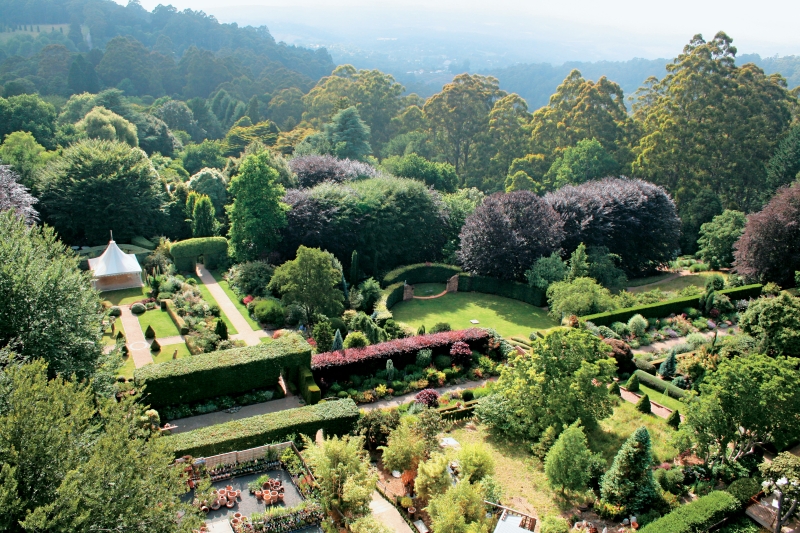
Fortunately, Cloudehill has its big historic trees and the varied spaces between them. All I had to do was augment the beginnings of the garden’s framework with hedges and in our climate we had a fair range of plants to choose from. However, except in gardens with the most extreme soil and climate conditions, there is always some choice.
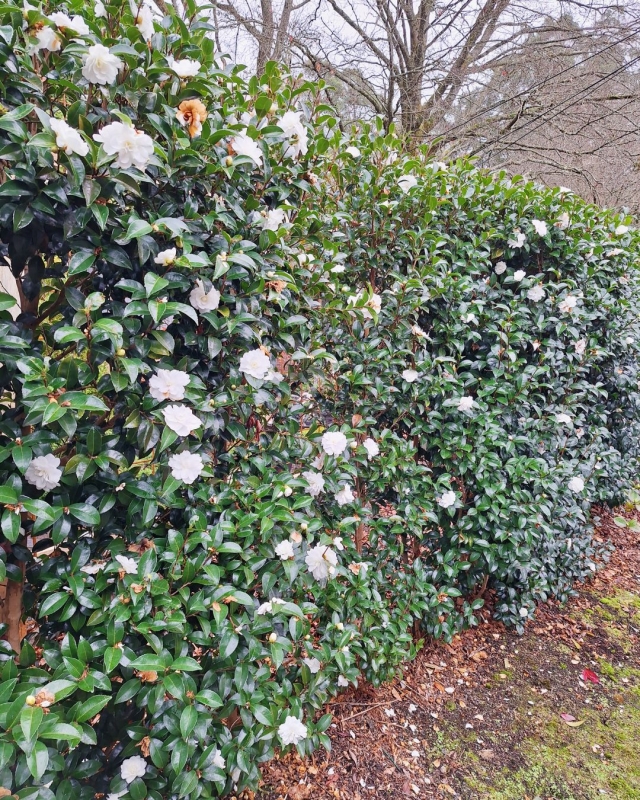
Cloudehill’s main hedging plant is European beech, Fagus sylvatica. Beech hedges do well for us and, like all good hedges, they only need one main annual clip in early summer and a quick tidy-up trim in autumn. ‘Neighbour-be-gone’ plants that fill their spot in months and then need clipping every six weeks are a nightmare. The best hedges are slower-growing ones, like osmanthus and Camellia sasanqua. These need only one clip annually after flowering. Both develop into a formal hedge or informal screen, fortuitously in full sun and in full shade, and they are both very drought resistant.
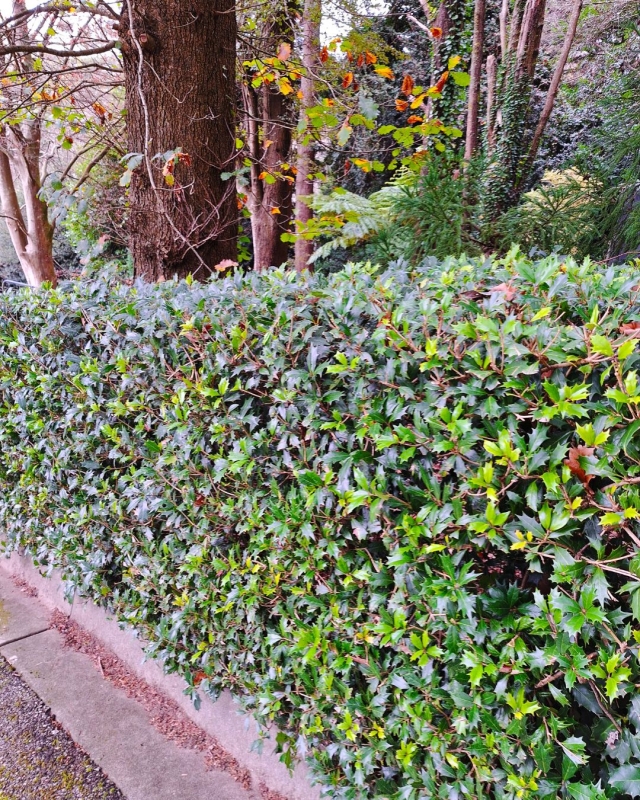
One of our best hedges is made from Osmanthus heterophyllus. People often think this form of osmanthus is a holly; however, its leaves are soft rather than prickly. It also has the bonus of perfumed autumn flowers. Osmanthus is slow-growing but worth the wait. Other species worth considering are O. delavayi, (1–2m) and O. fragrans (2–6m), both also wonderfully fragrant. Osmanthus deserves to be much better known in Australia, as most are easy to grow, even in low-rainfall areas.
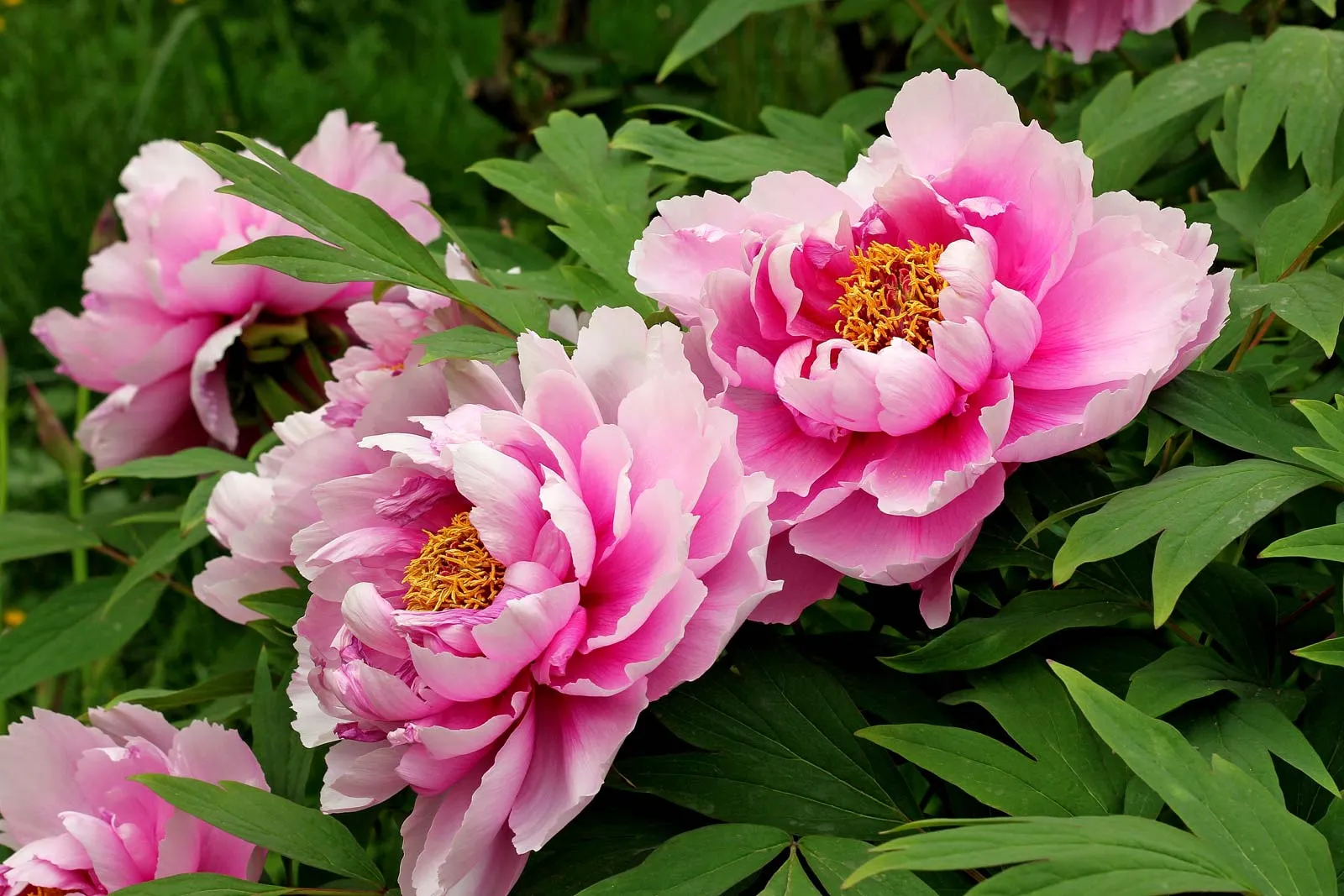
Celebration of Peonies
30 September – 4 November
This spring, celebrate the beauty of peonies at Cloudehill with spectacular blooms, specialist growers and inspiring workshops.
Visit the Diggers shop and nursery to see the stunning peony collection, take home fresh-cut flowers and enjoy pop-up stalls featuring peonies from Fresbrook Peony Farm, Pacific Coast irises and rare clivias. Meet the expert growers and fall in love with their beautiful flowering favourites.
Camellia sasanqua, and its many forms, provide another brilliant hedging plant. Much work has been done on this branch of the camellia family in Australia and the bulk of the selections available worldwide is owed to Bob Cherry. His C. sasanqua ‘Paradise Blush’ has been a standout, with faintly perfumed flowers (however a hedge in full flower will throw its perfume for metres) and relatively small leaves, something invaluable in a hedge. For instance, Camellia japonica can be hedged, but when its leaves are cut in half by a mechanical hedger they will scorch and look unsightly. Conversely, smaller leaves heal quickly and rarely scorch. C. japonica must be clipped with secateurs, and no fun at all.
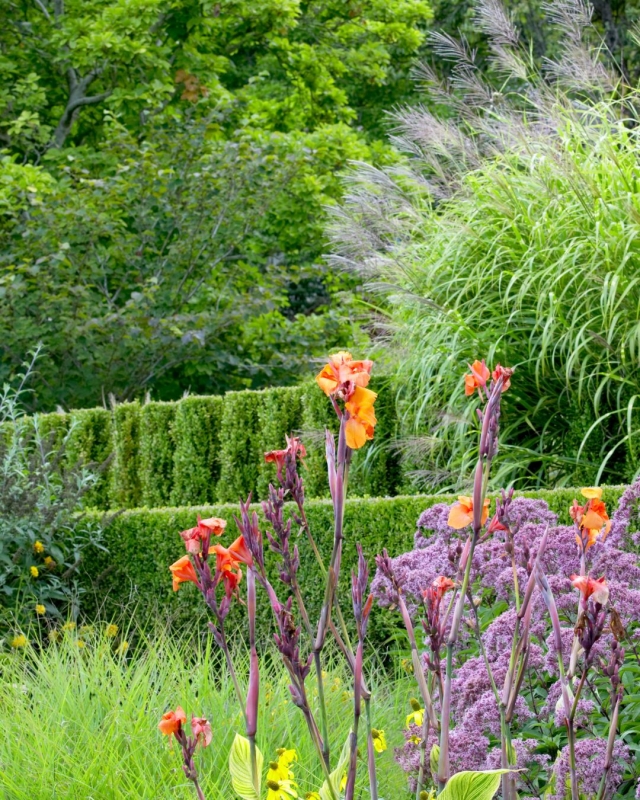
Camellia sasanqua ‘Avalanche’ is a more recent selection. It has superb, deep green, very small leaves and an upright habit. I feel the latter is a fault in a hedging plant. Upright plants that branch low down can be pulled apart by the wind and, in our case, snow. When this happens, the hedge never pulls itself back together, and there is nothing for it but to cut it to the ground and grow it up again, so it is not ideal. The best hedging plant sends up a leader to the required height and from there produces dense growth of lateral twigs to form the face on each side. Ideally, every twig should meet the face at close to 90 degrees.
Camellia sasanqua deserves to be used much more. Most grow quickly to full height and, when clipped, become twiggier and slow down. Their one fault is that they will not grow in alkaline soils.
Perhaps our gardens only need a hint of structure, such as topiary shapes clipped from box or westringia. Breeders have been busy with westringia, producing slower-growing forms and a wider range of foliage colours. This plant is particularly useful in coastal areas and can even withstand front-line coastal dune conditions. Much cutting-edge landscaping in Australia today utilises westringia. This native is becoming a mainstay of the contemporary Australian garden.
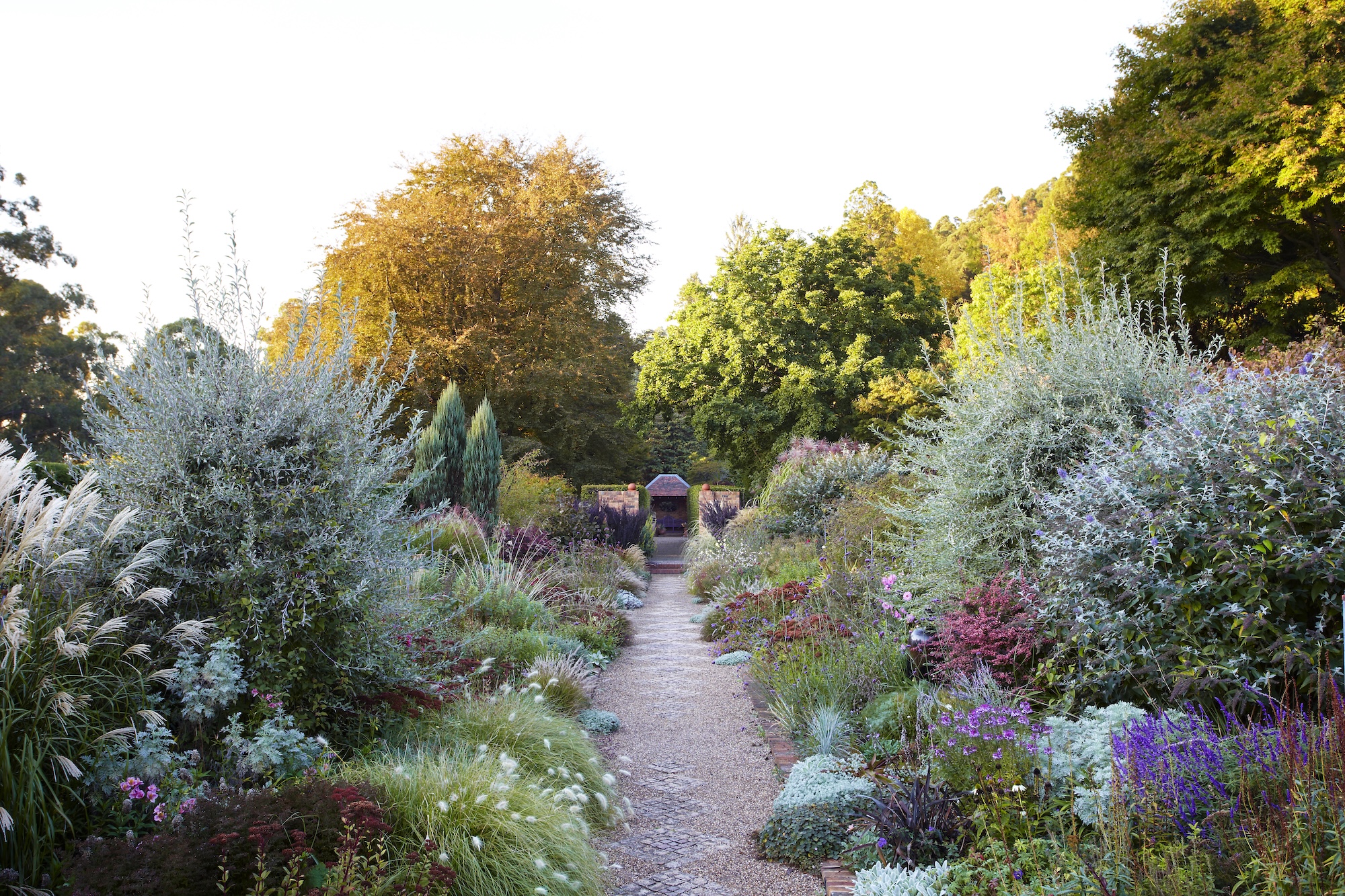
Visit Cloudehill
Visit Cloudehill this spring to see the sweeping bulb meadows of daffodils, bluebells and grasses, a perfect complement to the purple haze of emerging copper beech foliage. Bold rhododendron blooms and exquisite magnolias are at their finest, contrasting with the soft pastel hues of perennials as they fill out the main terrace borders. Get growing at the redesigned Diggers shop and nursery and enjoy refreshments overlooking the garden at Seasons Restaurant.