

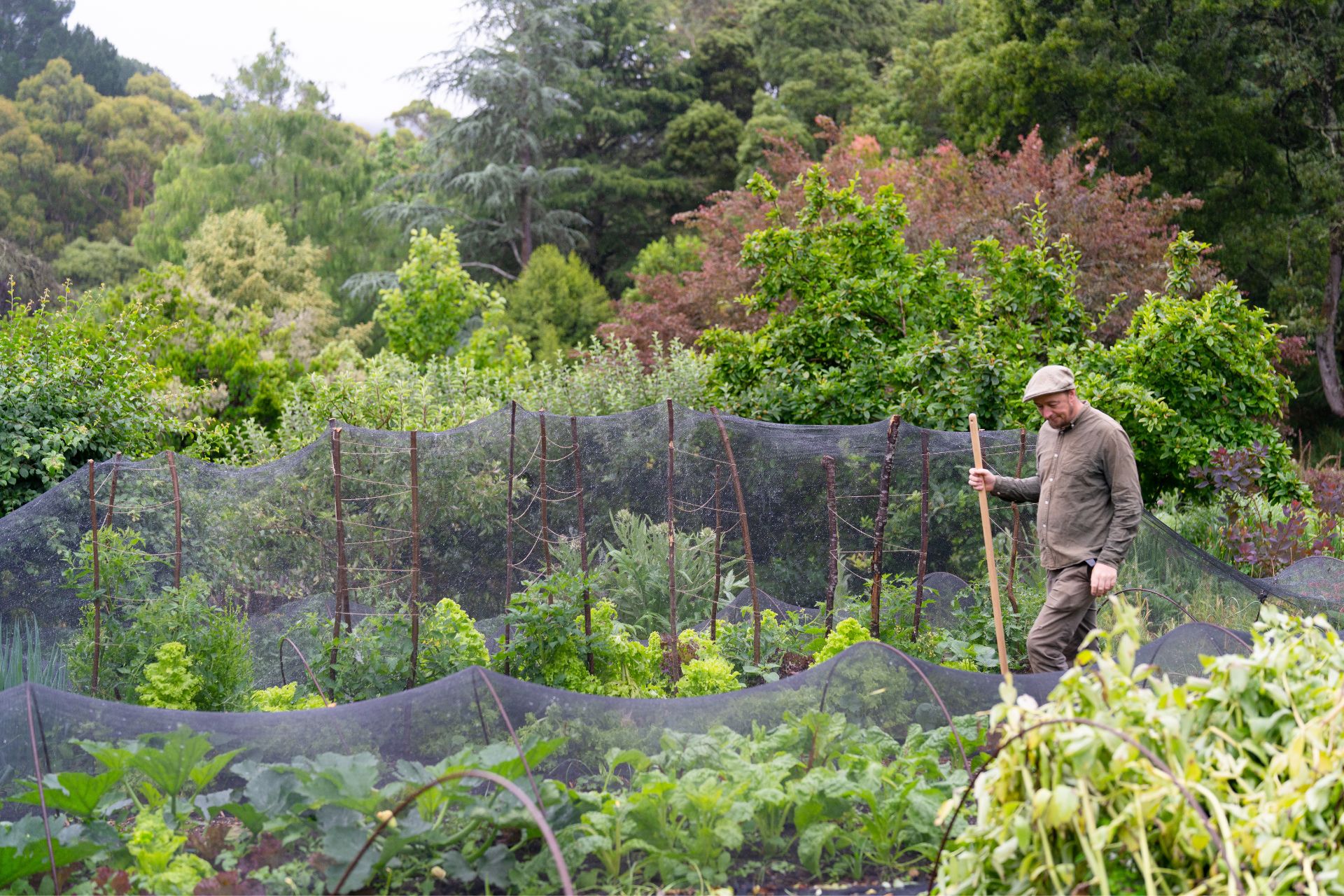
The Garden of St Erth grows on a former gold mining town named Simmons Reef. Tucked between hills of native bushland and not too far from the beautiful, red volcanic soils of the central highlands, a thriving garden grows from the worst possible ground. Like many gold mining areas, our natural soil is a combination of inert clay and mining rubble; broken up rock, mine tailings and quartz.
Gardening on clay soil can be difficult and challenging. The clay’s small particle size and water-holding capacity make it heavy to work with. Clay soils generally tend to compact. In the wetter months the ground becomes mud, soaking up water and excluding air from its pores, resulting in cold, wet soil without the necessary oxygen to sustain soil life or fertility. During our dry summers, the same ground can seize, baking in the sun like mud bricks, cracking and forming hard solid clumps that are just as difficult to work as the mud.
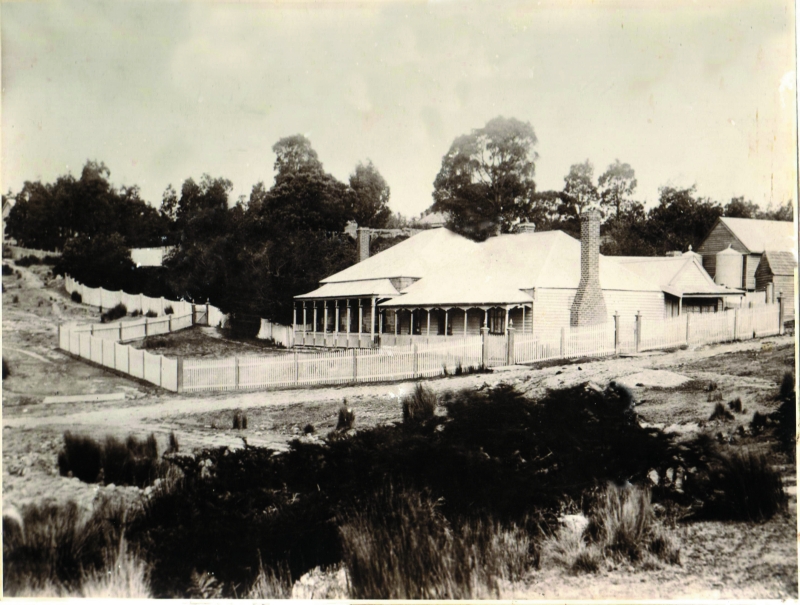
In the early years, St Erth’s founder, Tommy Garnett, sent a soil sample to a laboratory for analysis, hoping for practical advice. The simple diagnosis was “completely inappropriate soil on which to grow anything”. Undeterred, Tommy and his wife Penny persevered, adding copious amounts of horse manure, compost and other organic matter, and double digging the soil to aerate it and break up the clay.
Soil compaction is a common problem in both gardens and agricultural land in Australia. Machinery, livestock, foot traffic or even weather can compact soil, making it difficult for plant roots to penetrate and for soil life to survive. Fertile soil is made of many elements: nutrients, organic matter, moisture, and perhaps most importantly, air. Healthy, living soil with good structure is made up of approximately 50% pore spaces – small gaps between the solid material where air and water exist.
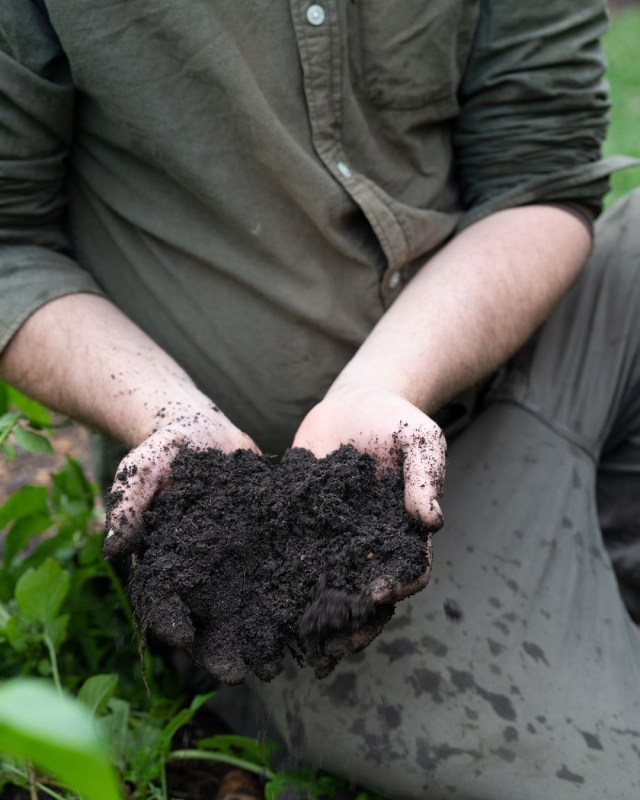
While digging and excessive tillage can be detrimental if performed haphazardly or when the soil is too wet, in many cases it is necessary to aerate the soil and incorporate compost or other amendments. Even in our depleted heavy clay, rapid soil improvement is possible. Soil biology is added via compost and deep cultivation creates the conditions for it to work its magic underground, structuring the soil and making the minerals in the clay available to plants.
Management of the soil surface is equally important in alleviating compaction. The soil should not be left bare, particularly in hot dry weather. Ideally a canopy of growing plants should be established to shade the soil but also allow air and moisture to move freely within it.
Mulches also protect the soil but care must be taken not to apply them so heavily that they exclude air. When I first gardened in Blackwood we applied a heavy mulch of pea straw each year, which no doubt added nutrients and organic matter. During the wetter months, however, the soil underneath became slimy and soggy with anaerobic conditions preventing soil development and reducing biology. In our orchard and food gardens, we now grow comfrey as a ground cover to act as a living mulch. Other areas receive coarse mulches like woodchip or gravel, used to protect the soil from the elements while allowing water and air to filter through.
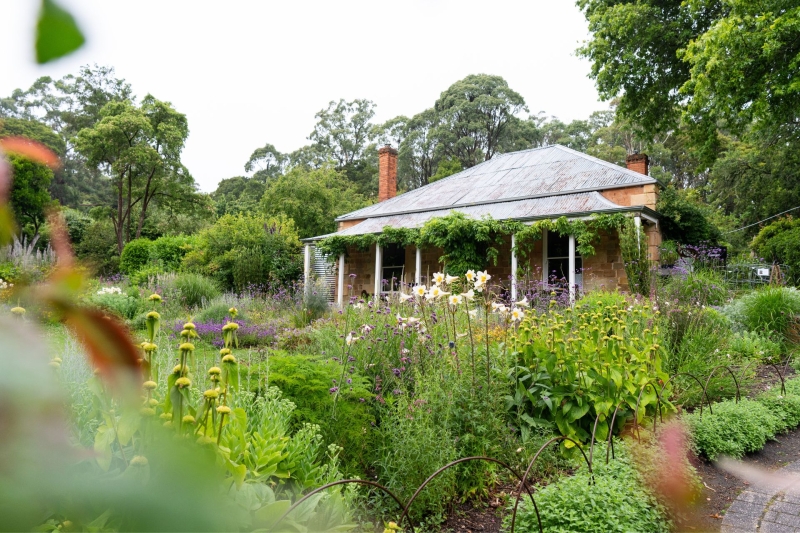
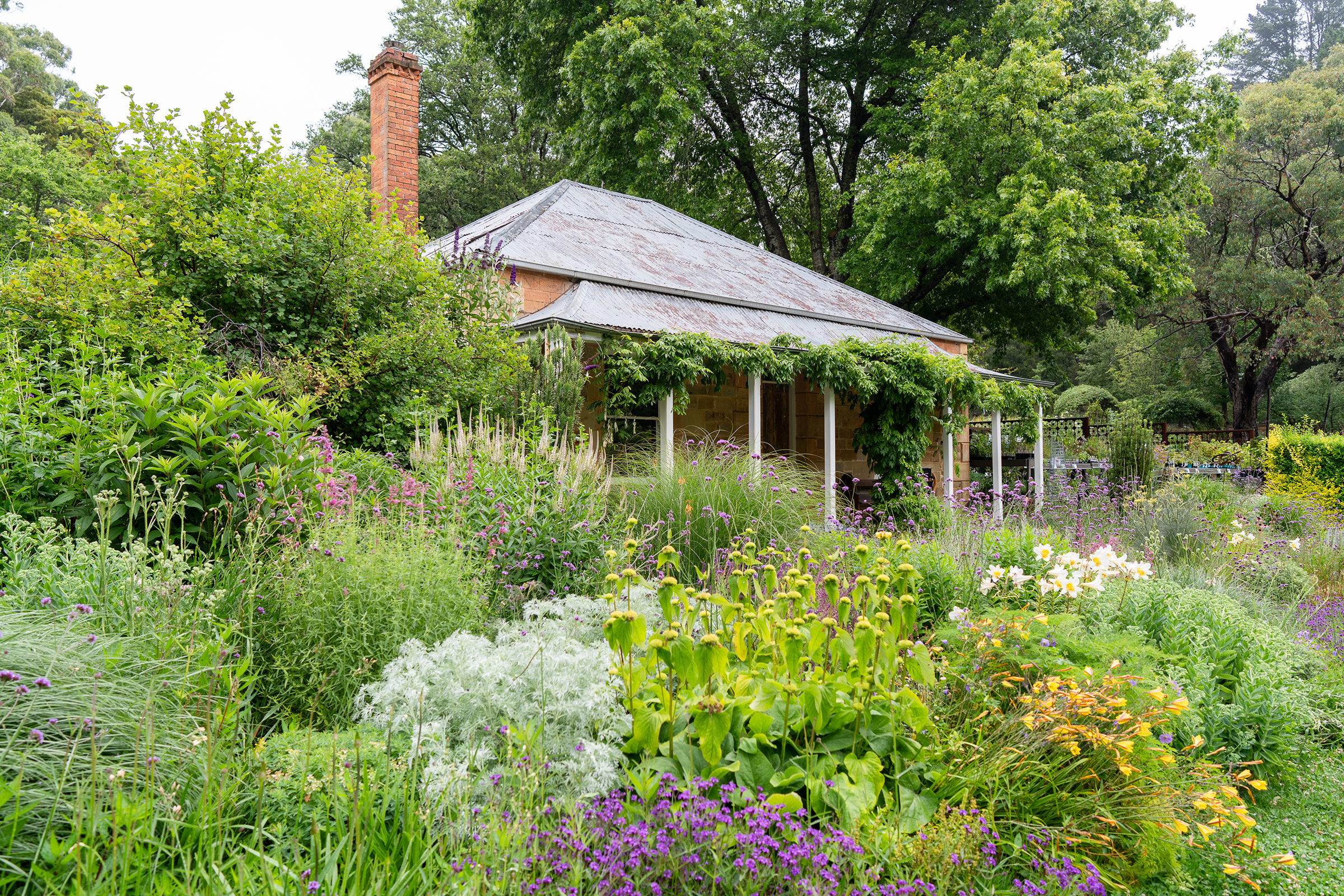
Visitors to St Erth today will notice fertile soil with healthy plants, varying in depth in different garden areas. The vegetable garden has received by far the most compost and intensive cultivation. The original mining rubble has developed into over 60cm of rich garden topsoil, entirely made by gardeners using careful organic techniques over the decades.
St Erth provides a great example of how, no matter what you are starting with, soil can be built and created by the gardener. Each crop and season should end with the land more fertile than it was before, with life reaching down further and further into the inert soil beneath.
Visit The Garden of St Erth
Treat yourself to a sensory overload at The Garden of St Erth this spring. Bush garden blooms, delicious scents, birdsong and blossom burst forth as the garden awakens. Colourful spring bulbs are a seasonal highlight – don’t miss the cheerful daffodil displays, snap a selfie beneath clear blue skies, then browse the reimagined shop displays and nursery before enjoying a well-earned refreshment in the terrace café.