

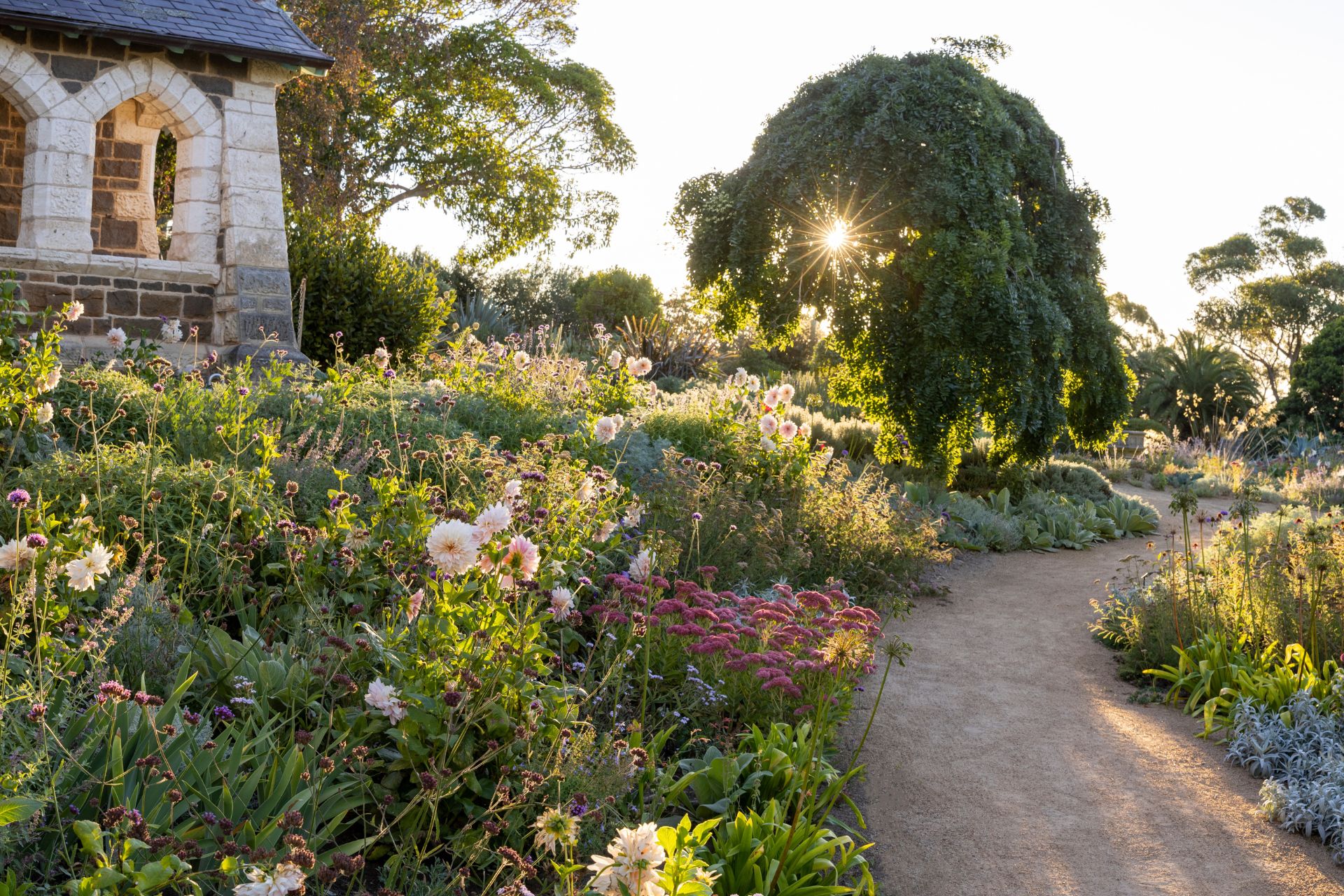
Although gardens with our cultivated plants are human creations, as distinct from the natural wilderness, the best gardens imitate nature and serve as a bridge between the natural world and our human environments. Varied plantings, mixed garden beds and complementary combinations help to imitate nature in our gardens and bring a wide range of benefits – from the aesthetic appeal of a garden that mirrors or blends with the surrounding natural landscape, to the biodiversity value of pollinator habitat that supports a healthy ecosystem of beneficial insects.
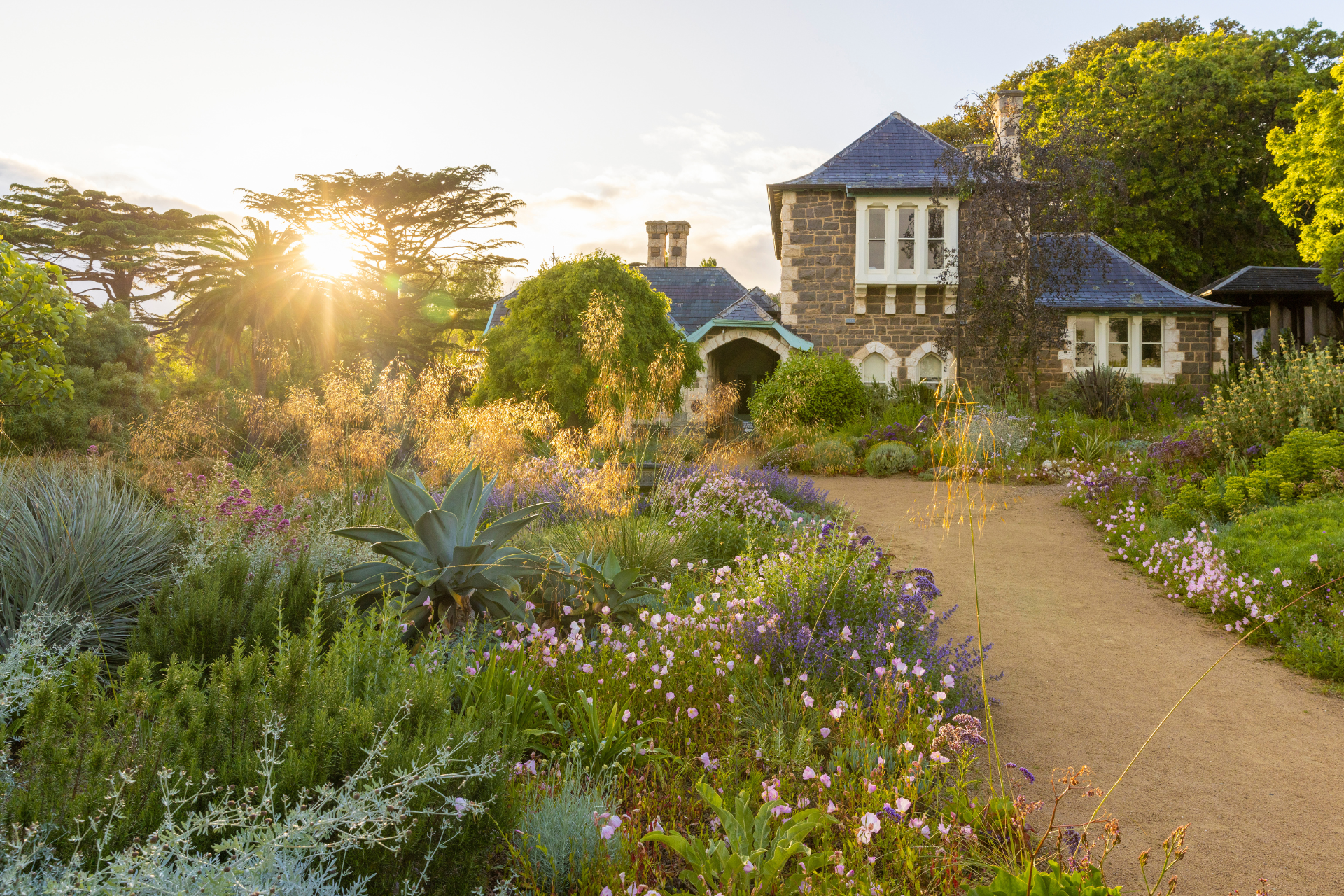
Heronswood and all our Diggers gardens boast a wide range of species, interplanted for maximum effect. On one side, the garden enjoys a spectacular view of Port Phillip Bay and behind it the majestic neo-Gothic architecture of Heronswood house. Over the years, Diggers gardeners used the garden to great effect, marrying the constructed landscape of the architecture with the borrowed natural landscape. Care has been taken to avoid obscuring the view and when selecting plants, consideration is always given to colours that suit the maritime theme, particularly in the upper parts of the garden. Similarly, plantings around the house are carefully curated to harmonise with the building’s blue granite and slate.
The structure of the garden is also considered. The circular rooms and spires of Heronswood house are repeated in the garden landscape as parterres, circular lawns and gently curved garden beds.
Within the garden beds a balance needs to be found between formality and wildness. Planting needs to look intentional yet naturalistic. Simple ways to do this include planting in odd numbers and avoiding regular patterns or straight lines.
On the slopes between our seed trial garden we grow a mixture of shrubs, flowers and edibles in what we call our pollinator beds. Different salvias, roses, and annuals ensure that something is in bloom year-round, attracting beneficial insects, bees and other pollinators, who then visit our vegetable trials and fruit trees.
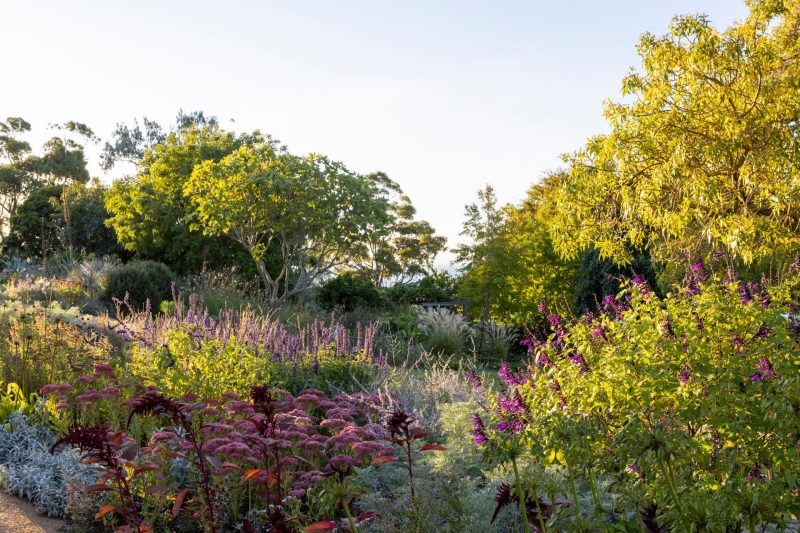
We are often asked how we keep insects from eating our crops and which pesticides we use. Heronswood has been managed organically for almost 20 years, and we use only mild organic pest-control sprays when absolutely necessary. Healthy, organically grown plants and a very diverse garden mean that we rarely have pest problems. The garden is viewed as a whole living ecosystem with areas like our pollinator garden providing food and shelter for many species of friendly insects and small birds, which will happily feast on any harmful grubs.
Companion planting is another method we use that increases diversity, creates a naturalistic look and benefits the plants involved. Often combinations of crops do better than a single one planted alone. Plants, like people, are sociable creatures that have a preference as to who they mingle with. In our vegetable garden, we combine crops that complement each other in timing or in their growth habits. Slow-growing carrots go well with faster-maturing vegetables like radishes, providing two crops from the same space and shading the soil for longer. Cucumbers and pumpkins cover the ground beneath taller-growing corn, then enjoy its shade in late summer.
Legumes like peas and beans are given special priority as they pull valuable nitrogen from the air when they flower and fix it in the soil. Wherever possible, gaps are filled with dwarf green beans during summer. The delicious beans and compost material they produce are a bonus. During the cooler months, broad beans are planted not just in the vegetable garden but as an understory to summer-fruiting trees, berries and shrubs. When bud burst comes in spring, the broad beans can be cut at ground level and added to the compost, used as mulch, or left to produce beans if there is room.
In this way, the garden becomes part of a larger living system. By encouraging diversity and allowing plants to support one another, we create spaces that are more resilient, productive and alive.
Visit Heronswood
Visit Heronswood in spring to see this beautiful coastal garden come to life. From the abundant seasonal produce in our newly planted Kitchen Garden and edible parterres, to the colourful subtropical food plants and reworked perennial borders, this working educational garden will inspire with its living laboratory of climate-wise plants. Explore our reimagined Diggers shop, nursery and café to get started on your spring sowing and growing.