

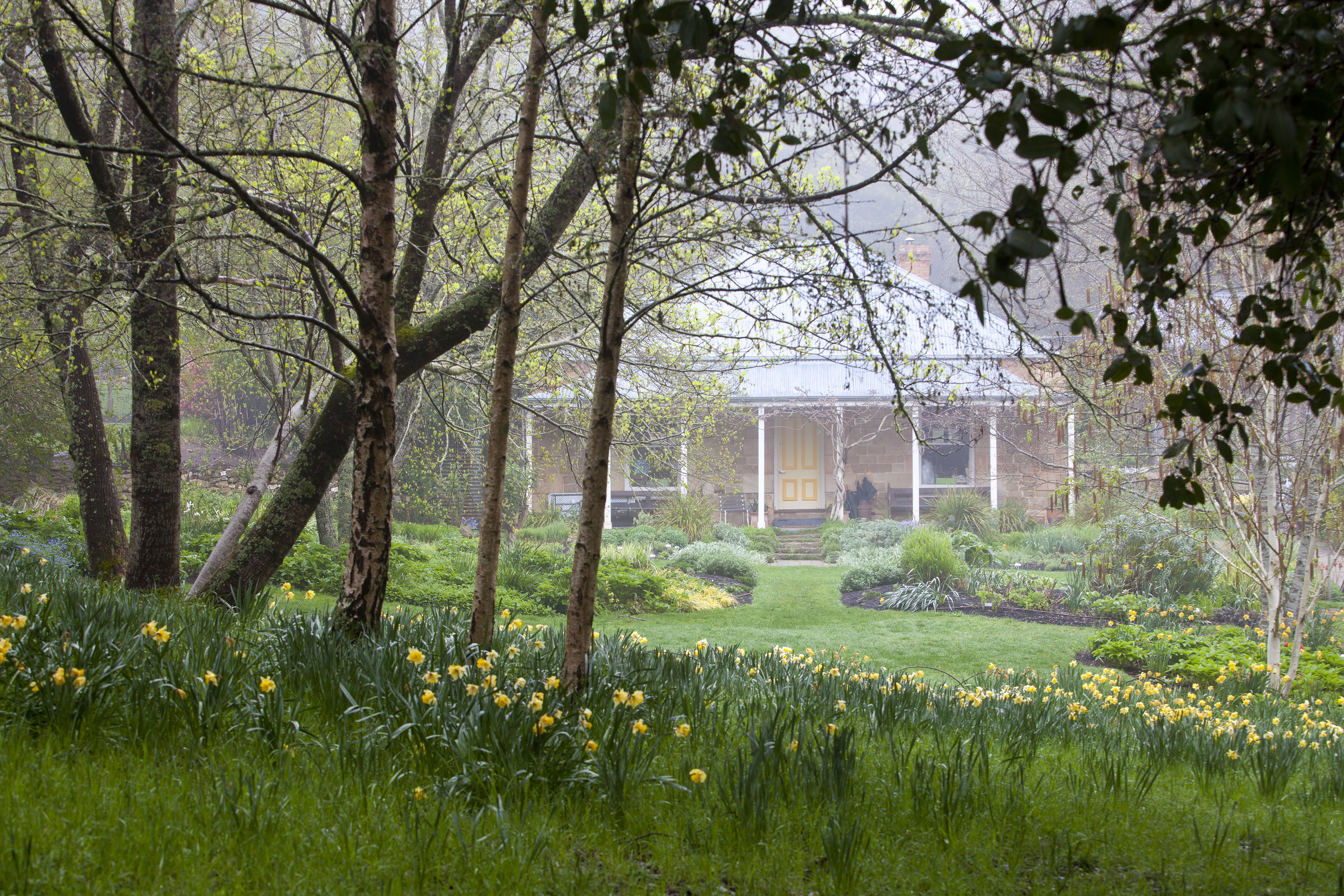
The cold inland climate of Blackwood, with regular frosts over winter and occasional snow, can limit our plant choices. Citrus and subtropical plants struggle to grow and our summer growing season is short. Yet the winters here provide the benefit of a true dormancy period where all growth stops, giving us the chance to catch up on garden tasks, prepare for spring and do any structural pruning in the orchard.
The colder months bring a different kind of beauty to the garden. Hellebores and early bulbs provide welcome colour under the grey winter skies and heavily pruned perennial beds expose the structural bones of the garden. Winter gives our gardeners the chance to review planting schemes and replenish the soil annually with compost in preparation for active growth during the warmer months.
The colder climate is perfect for many fruit trees. Apples, pears, plums and peaches all do well, requiring the winter dormancy to flower and fruit when the warmer months arrive.
Summer pruning is used in our espalier orchard and on the new growth of our fruit trees to keep them to a manageable size, encourage fruiting and to direct the tree’s energy where it’s needed. For established fruit trees with a good structure and shape, pruning the new growth during summer is often all that’s needed.
On older trees lacking vigour or with congested crossing branches, more extensive pruning is sometimes necessary. Winter offers the opportunity to prune larger branches when trees are fully dormant. Any cuts into older wood or heavier pruning requiring a pruning saw are best done during this downtime. Hard winter pruning shocks the tree a little and causes vigorous regrowth the following spring.
While we avoid getting into a cycle of hard pruning each year, judicious treatment of each tree allows us to resort to winter pruning when more vigour is required and to control excessive summer growth.
Pruning advice
Fruit trees with dead wood, crowded or congested growth towards the centre are ideal candidates for winter pruning. Aim to create an open, vase-like shape that allows light and airflow through the canopy. Remove dead wood and crossing branches.
Winter pruning can reduce tree height for easier harvesting or netting. It’s safe to remove up to one-third of the tree. Be aware this can trigger vigorous spring growth, so follow up with summer pruning to manage excess vigour.
Older fruit trees may lose vigour and produce less. Pruning in winter can
help rejuvenate them by encouraging fresh, productive growth. With good care, apple and pear trees can live and fruit for hundreds of years.
Larger, older wood should be pruned during winter dormancy. Use sharp, clean secateurs, loppers and a pruning saw and sterilise tools between trees to prevent the spread of disease.