

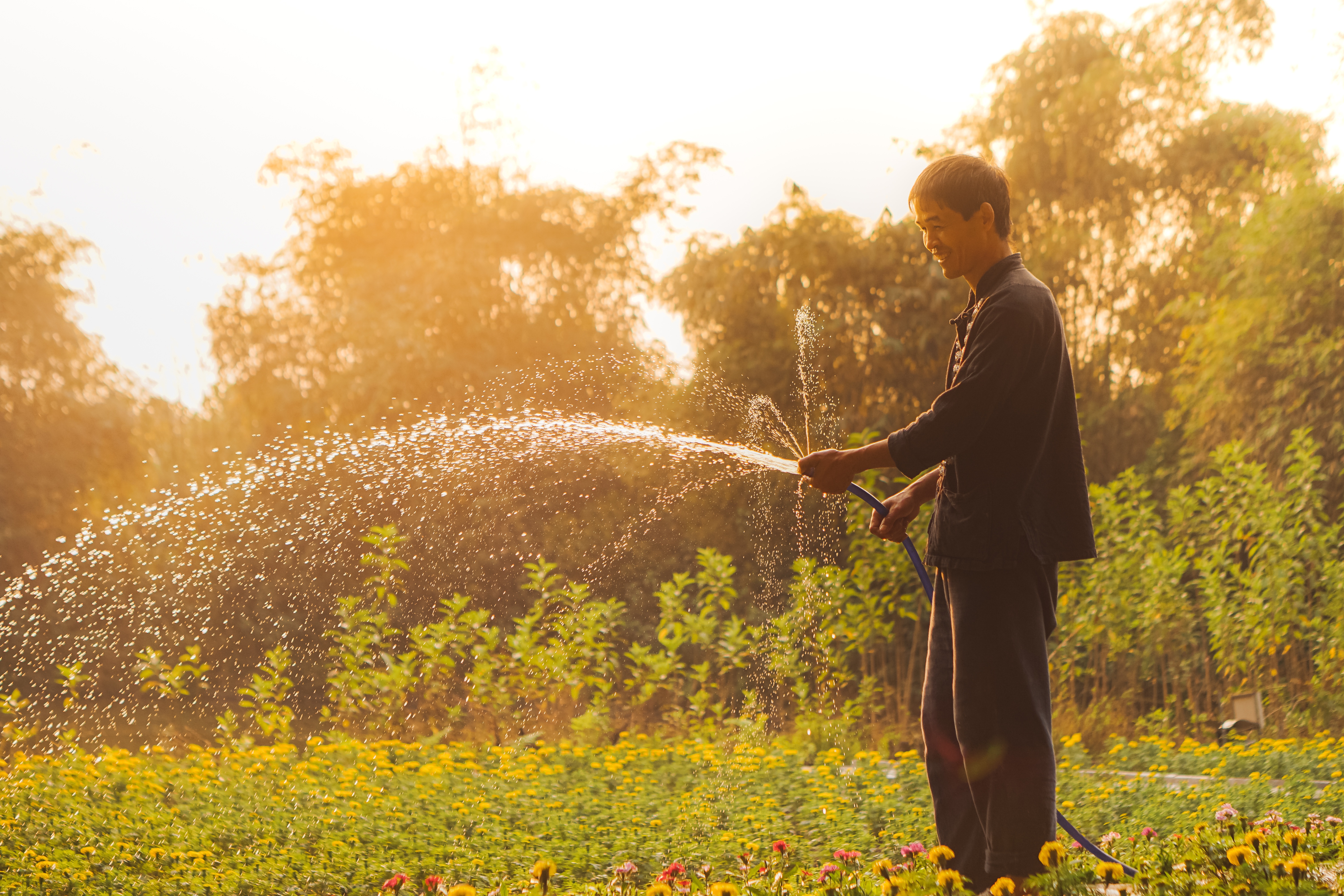
Drip-irrigation
For many gardeners, drip irrigation is the go-to way to improve a garden’s water efficiency. These systems of thin pipes are commonly viewed as an alternative to sprinklers and slowly apply water to a plant’s root zone, causing very little water to be lost to evaporation, wind or run-off on paved surfaces. In most systems, the exact rate of water dispersal can be fine-tuned to suit your crops.
However, drip systems have two main downsides.
Drip systems are ideal for trees, shrubs and vegetables sown in neat rows, however they can be troublesome to arrange for irregular garden beds or creative garden layouts.
Drip systems are most effective with established plants, but don’t sufficiently wet the soil to support germination of surface sown vegetables such as carrots, onions or lettuce. For these crops, overhead sprinklers are often necessary.
Regardless, installing a drip system can provide immediate benefits for your garden, saving water throughout the year.
Mulch
Proper mulching is a familiar technique for experienced gardeners for many reasons. Most importantly during hot summer months, mulching traps water and significantly reduces evaporation loss, ensuring water in your garden is efficiently used by your plants. Mulch also has a cooling effect on the soil, which further reduces water lost to evaporation and can support plant growth.
Mulch also helps your plants thrive by preventing weeds from sprouting and competing for water and nutrients in the soil. In the long term, mulch also adds organic matter to the soil, increasing the carbon levels for future crops.
Greywater
Greywater is a reliable alternative water supply for gardeners, recycling water from showers, baths, sinks and washing machines to water your garden. The average household produces 89,000 litres of grey water each year, which is more than enough to support even large gardens up to 150m2.
Installing greywater plumbing may require some time and money upfront, but these systems are a long-term investment that will pay off during hot periods for years to come.
Organic content in soil
CSIRO research has shown that soils with higher organic content hold up to four times as much water as sandy soils without organic carbon. Every 1% of extra organic matter in your soil increases the water holding potential of the soil by 137%, making this an excellent way to increase the water efficiency of your garden.
However, increasing organic content levels in soil is a slow process that can take many years. Nevertheless, soil improvement is always a worthwhile long-term goal that brings many benefits to your garden.