

Australia is a land of stark contrasts. Fire and flood have dominated the first half of 2025 and while we cannot control the weather, we can choose what to plant where in our gardens.
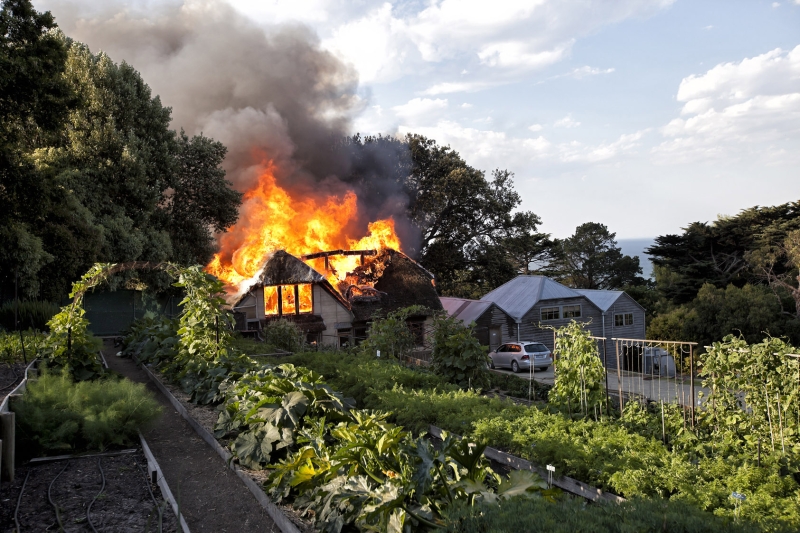
Long-term Diggers members may recall the 2014 fire that wiped out Heronswood’s thatched roof building. In a devastating blow to both the Blazey family and The Diggers Club, countless original documents and records, not to mention our offices and Fork to Fork kitchen and restaurant were destroyed. Clive and Penny Blazey watched as the flames threatened their historic home, but fortunately, a large well-established Morton Bay Fig acted as a shield to the flames, and Heronswood house was saved. Today, a remnant earthen wall stands at the entrance to the shop – a permanent reminder of the danger that fires pose in our volatile environment.
Fire is not only a concern for those in the bush, forest and rural areas, it can impact homes in the suburbs too. A recent study undertaken by four Greater Hobart councils in partnership with Sparking Conversations, Igniting Action Bushfire Resilience Project and researchers at the University of Tasmania’s FireLab, has produced a guide to the flammability of common garden plants to encourage people to create more bushfire-resilient homes.
While the program looked at common garden plants in and around Hobart, these plants are equally popular in many parts of Australia.
Professor David Bowman from the University of Tasmania said “Plant flammability significantly impacts fire risk assessments and influences how fires behave in both natural and urban environments. We have now tested hundreds of popular garden plant and tree varieties … to come up with garden plant flammability ratings. Each plant sample was tested under controlled conditions and evaluated based on ease of ignition, burn temperature, duration and completeness.”
Hobart Lord Mayor Councillor Anna Reynolds said, “Many people who live in bushfire-prone areas recognise the benefits
of preparing their property for bushfires, but they say that they need more help and advice. This practical guide will assist people to make informed decisions about the types of trees, plants and shrubs they plant in their garden and around the house.”
The three-page guide covers a little of everything, from herbs and shrubs to succulents, trees and ferns.
Victoria’s Country Fire Authority (CFA) also list extensive references and tips on plant selection to minimise the risk of fire damage. Through a series of questions, the interactive website advises a plant’s flammability rating, from low through to extreme. Grasses above 30cm in height, for example, are on the flammable list, while other herbaceous perennials under 30cm are considered firewise.
There is always room for error and blanket rules do not cover all species and their use or position in the garden. If in doubt, here are a few tips from the CFA to consider when landscaping:
- There are no ‘fireproof’ plants – they will all burn in extreme fire-weather conditions.
- The moisture content of leaves is a major factor affecting how easily a plant will burn.
- The location and arrangement of plants have a significant effect on reducing bushfire risk in your garden.
- During summer as soil dries out, the moisture content of plants will decrease and their flammability will increase.