

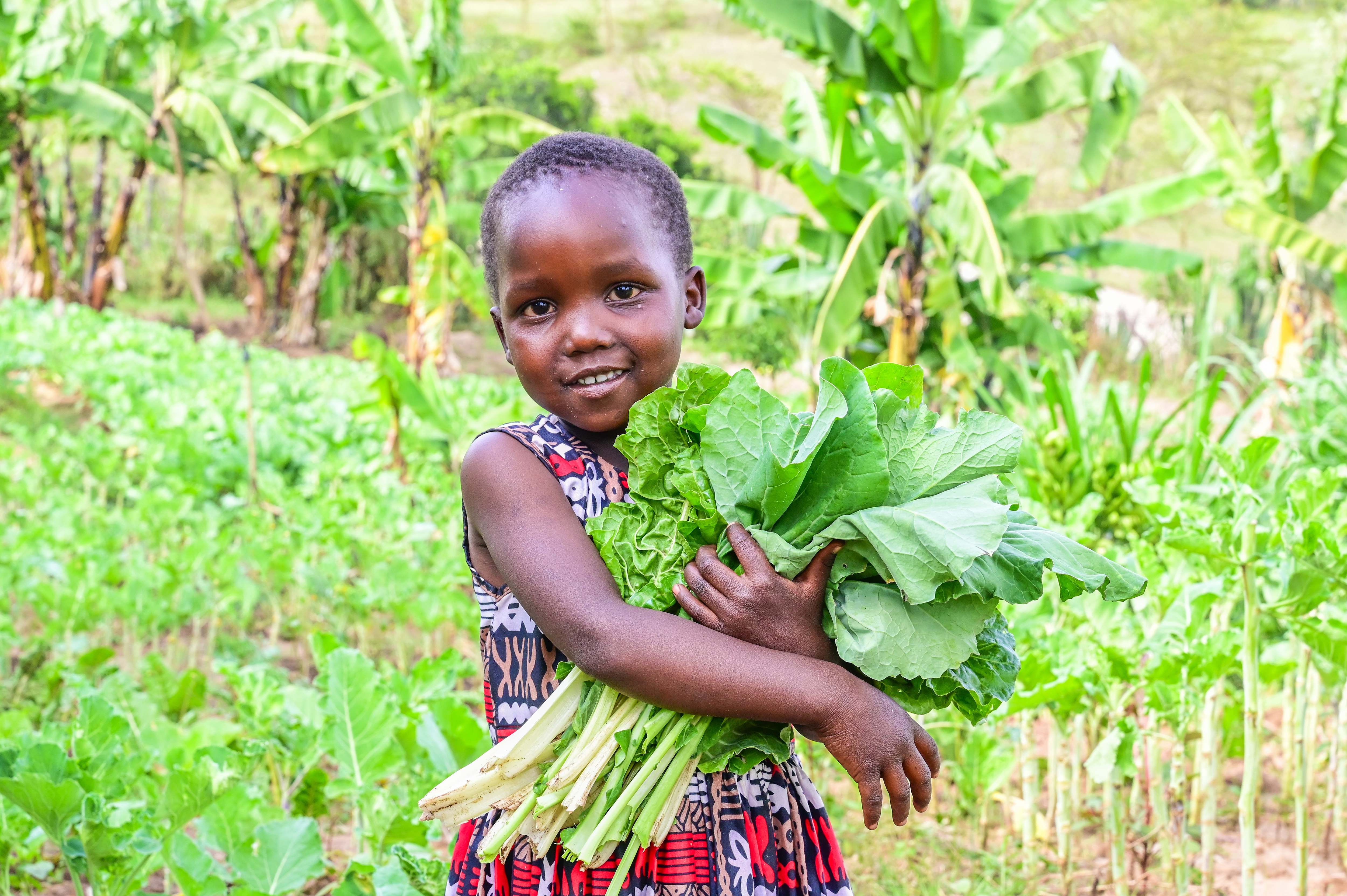
Land degradation, both a symptom and a cause of climate change, is among the most pressing of all environmental problems, further perpetuating the intergenerational cycle of poverty. In 1983, while living in West Africa, I experienced two life-changing events that helped break this cycle.
Firstly, the discovery of the ‘underground forest’. I managed a small reforestation project supplying tree seedlings to 15 villages. Drought, windstorms, goats, insects and people’s negative attitudes towards trees on farms were contributing to over 80% of the seedlings dying. It seemed an impossible task and at times I felt tempted to give up.
After exhausting all avenues, the solution came as an answer to prayer. Standing beside the road, scanning the barren landscape, the futility and hopelessness of it all weighed heavily on me. As I was about to get into the vehicle, a bush caught my attention. I had never given these useless-looking bushes much thought. However, this day I took a closer look. Leaves are like signatures, often telling you what species a plant is. The distinctively shaped Bauhinia leaves were no exception. This was not a bush. This was a tree! It had been cut down and I was looking at shoots sprouting from a buried stump.
In that instant everything changed. This was the solution I had been seeking, and all the time it had literally been under my feet! By nurturing the natural regrowth from living stumps and self-seeded trees, the costly process of nursery, transport, planting and watering could be avoided entirely.
The method was called Farmer Managed Natural Regeneration (FMNR). As a technical approach, FMNR involves the selection and management of trees and shrubs growing from tree stumps and seeds. Excess shoots are culled, leaving five or so stems. Lower branches are removed. The trees are protected from fire, animals and cutting.
The second event was a devastating drought. Knowing what to do is one thing. Convincing sceptical farmers to adopt something new is quite another. Hence, of necessity, FMNR also involves training and empowering farmers. Initially it was the life-threatening drought of 1983 that broke down barriers and opened the door to working closely with farmers in 100 villages.
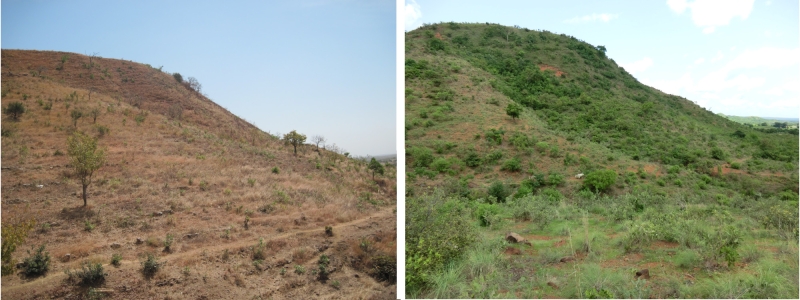
Over time, as farmers saw the benefits of having trees on their fields, FMNR was adopted locally and widely accepted. The emerging trees helped reduce damaging winds while providing habitat for predators that keep insect pests in check. By leveraging existing root systems, tree growth and carbon capture accelerated. The trees provided fodder, fuelwood, wild foods and traditional medicines. Soil fertility and moisture retention increased. The microclimate became more favourable.
Farmers were now able to diversify the crops they grew and the livestock they raised, while also increasing their overall food production. Trees literally meant the difference between hunger and plenty, destitution and life with dignity.
Over the following 20 years, FMNR spread from farmer to farmer across 5 million hectares of farmland. More than 200 million trees were regenerated. Farmer incomes soared and each year an additional 500,000 tons of grain – enough to feed 2.5 million people – was harvested. This was not achieved with artificial fertilisers, irrigation or GMOs. It was achieved by virtue of working with nature rather than fighting against it and destroying it.
A Senegalese schoolboy had a powerful testimony: “If our parents kept destroying the environment… I wouldn’t be able to have children of my own, because I wouldn’t be able to feed them.”
What can everyday Australians do? For years, while gardening at home, I pulled up invasive privet trees, all the while paying good money for tomato stakes and bean poles! I now manage these ‘weeds’ to produce my own stakes and poles, saving money. On Australian farms, applying the principles of FMNR in a contextually appropriate manner would bring environmental and economic benefits. Together, we can create lasting, global change.
Learn more at fmnrhub.com.au
Tony Rinaudo is an environmental and humanitarian leader whose life’s work focuses on empowering communities to restore degraded land, and he currently serves as World Vision’s principal climate action advisor, promoting reforestation initiatives globally. He was awarded the 2025 Luxembourg Peace Prize for Outstanding Environmental Peace.
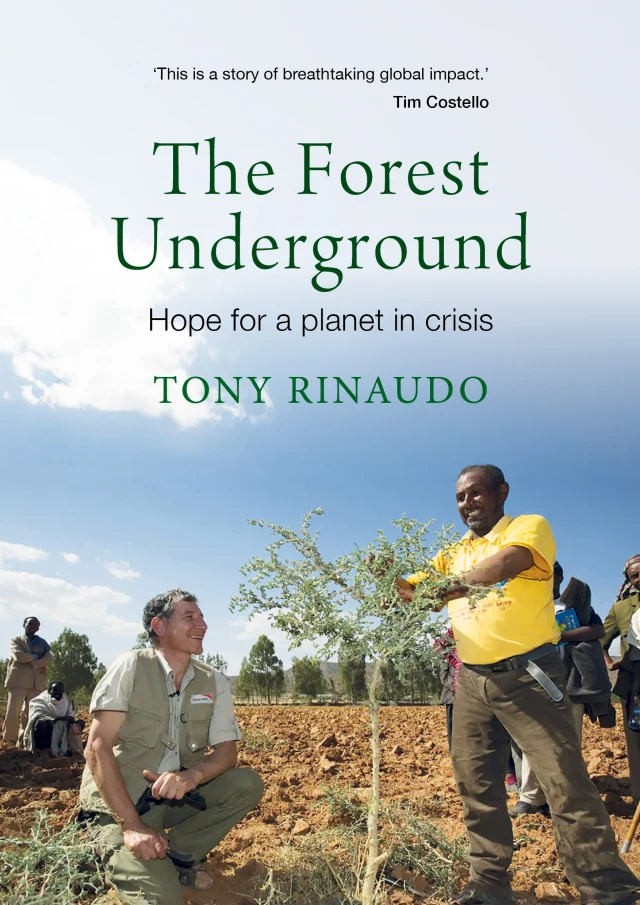
The Forest Underground
Tony’s softcover book is available to order on the Diggers website.