

I am lucky to visit gardens around the world as part of my work. It’s always interesting to see how gardeners in other countries deal with their soils and climate, and think about what lessons can be learned from them.
Australians sometimes imagine that we are the only people on earth who have to endure hot, dry summers. However, plenty of other places have a summer-dry, or ‘Mediterranean’ climate. One such place is southern France. Long a holiday destination for sun-seeking northern Europeans, ‘the south of France’ has a climate that shares a lot in common with Canberra, Melbourne, Hobart, Adelaide, Perth and everywhere in between. The further south you go in France, the rockier and more inhospitable the soils become. And yet they maintain beautiful, highly characteristic gardens there.
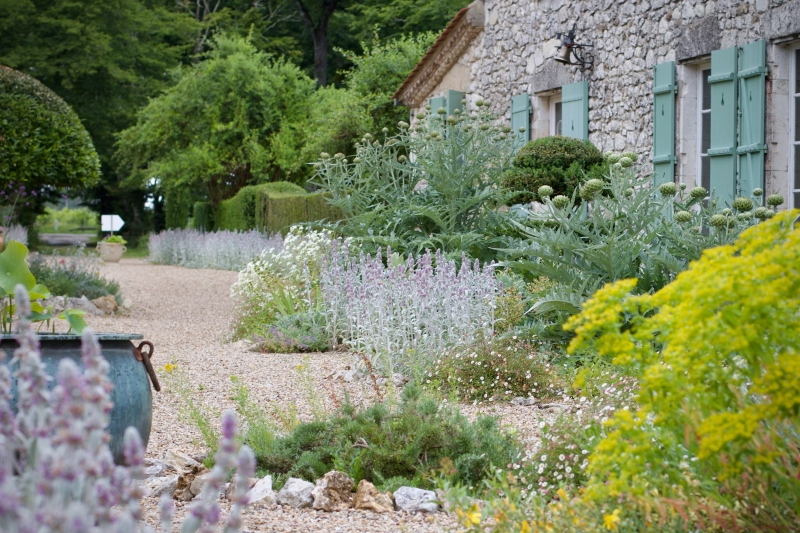
Perhaps the most important lesson we can learn from French gardeners is reliance on their natural rainfall. It is rare to see kilometres of brown irrigation hose snaking around a French garden. Instead there is a quiet acceptance that gardens will look a little crispy around the edges in summer, which is naturally the season of dormancy in a Mediterranean climate. This is quite a contrast with Australia, where we are happy to see irrigation hoses everywhere so that our gardens remain paradoxically green during the driest time of year. This is a long-standing hangover from our British forebears, where summer is the time of maximum growth.
Lawns are rare in French gardens. Their medium-density living arrangements preclude private lawns. Surfaces tend to be paved or gravelled. These don’t require water or labour to keep them looking tidy. However, they do contribute to the urban heat island effect, so there is a conversation to be had around their pros and cons in an Australian context. Paved surfaces often go hand in hand with deciduous shade trees, such as plane trees and mulberries, which are frequently pollarded to keep them in scale.
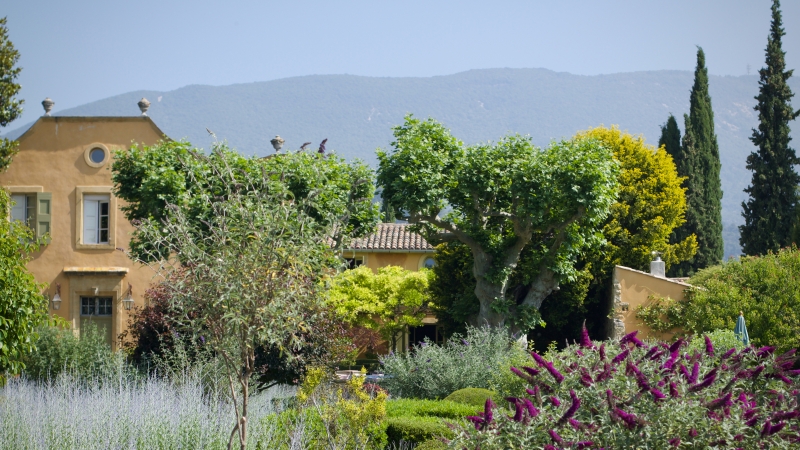
In Anglo cultures, we often plan our gardens around floral colour. We do love our flowers. But flowers are fleeting. Shapes are more important than colours in any French garden design. Shapes remain interesting when flowers are long gone. The most iconic plant in Mediterranean gardens is the pencil pine (Cupressus sempervirens), which gives strong vertical emphasis, even in the smallest garden.
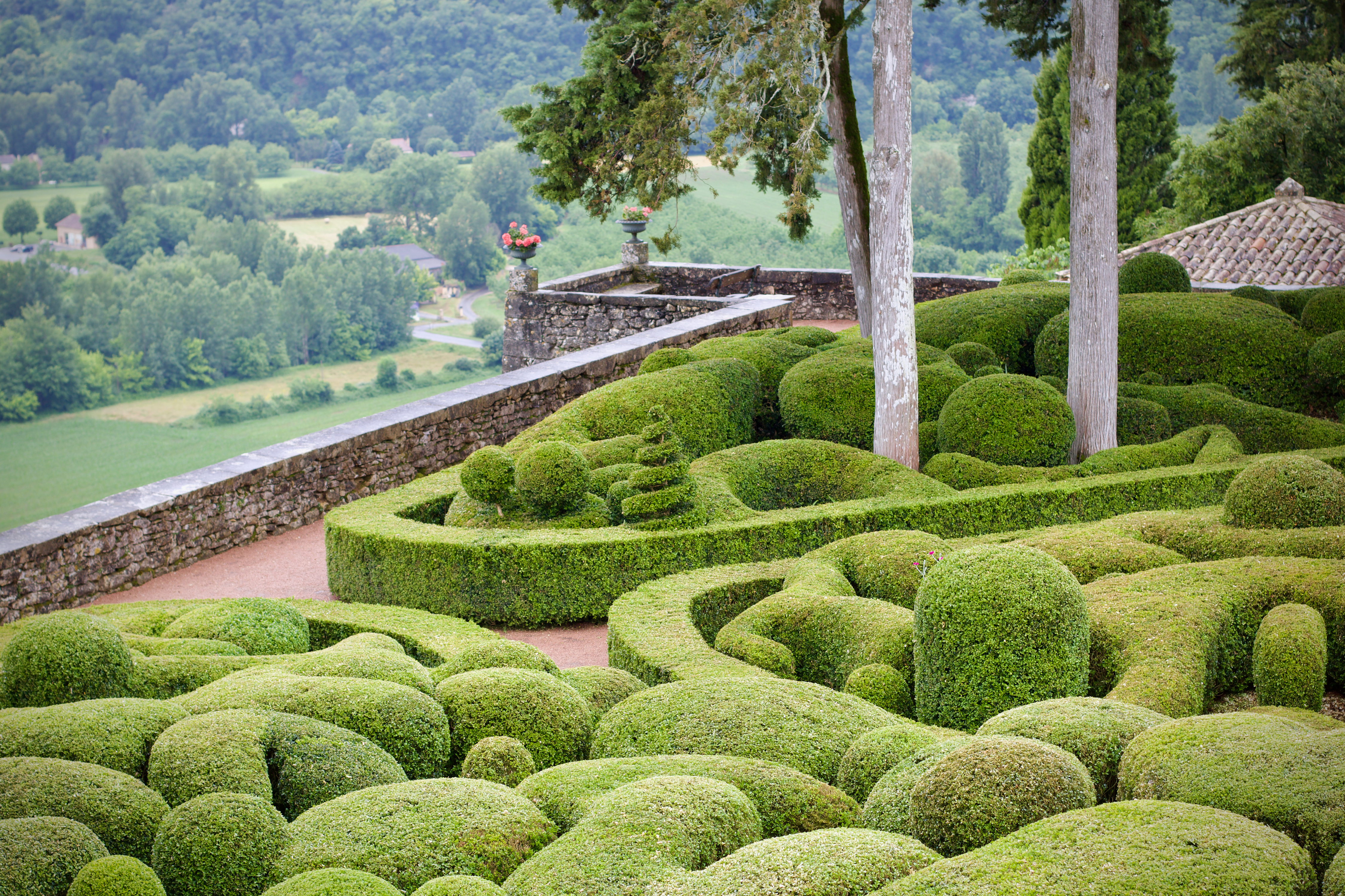
There tends to be more woody plants than herbaceous plants in southern French gardens, most of it shaped in some way. The French have a strong national tradition of formal hedging and topiary, dating from their baroque jardins à la française, typified by the garden at Versailles. Nowadays, they take a more freestyle approach to clipping plants into whimsical cloud-like forms, for example. But topiary’s centrality to the French garden design remains unchanged. Olives, box, and dwarf myrtle make perfect clipped forms.
In southern France, there is a preference (sometimes legally mandated) for using local materials, such as limestone or the golden stone of the Dordogne, for constructing buildings and hard landscaping such as garden walls, steps and paved areas. Using local materials helps tie gardens to the wider landscape.
Perhaps most interesting to us is French gardeners’ plant selection. Mediterranean native plants, such as cistus, rosemary and lavender, sit alongside species from similar climates around the world. For example, Morocco (fan palms), South Africa (aloes), the Eastern Mediterranean (damask roses), Chile (alstroemerias), California (agaves) and even southern Australia (bottlebrush). We can easily incorporate all of these tips into our own gardens in southern Australia to create oases of beauty.
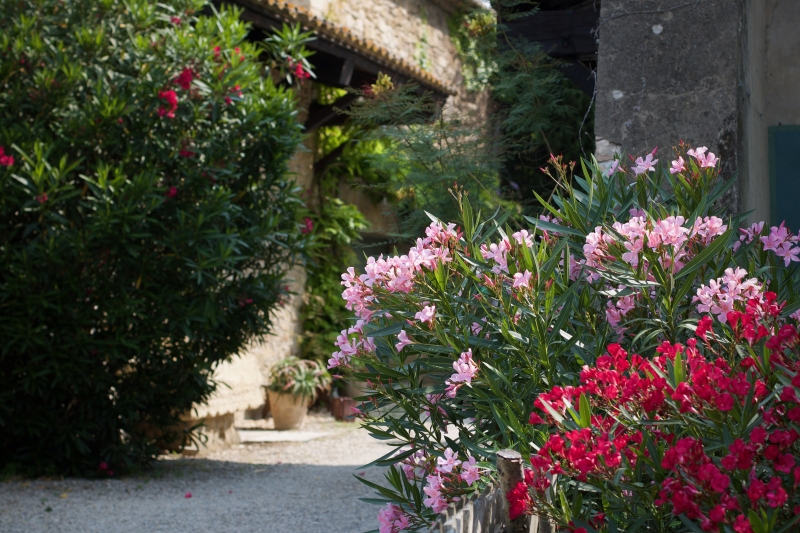
One of my favourite Mediterranean shrubs is oleander (Nerium oleander). I remember my mother telling me that she knew somebody who stirred a cup of tea with an oleander twig and fell stone dead. I have heard that same story repeated umpteen times by others since. Either the unlucky tea-stirrer had an enormous friendship group before their death, or the story is an urban myth. Oleander is indeed toxic, but so are daffodils and rhubarb foliage, and nobody is silly enough to eat those.
Oleander is a ridiculously tough, summer-flowering shrub. It will grow in any soil type, including salty soils. It will withstand inundation, drought and, as the residents of Hiroshima discovered, nuclear bomb blasts. Even during the hottest weather, oleander looks glossy and generous. Plants this resilient are exactly what we need in this land of increasing droughts and flooding rains.