

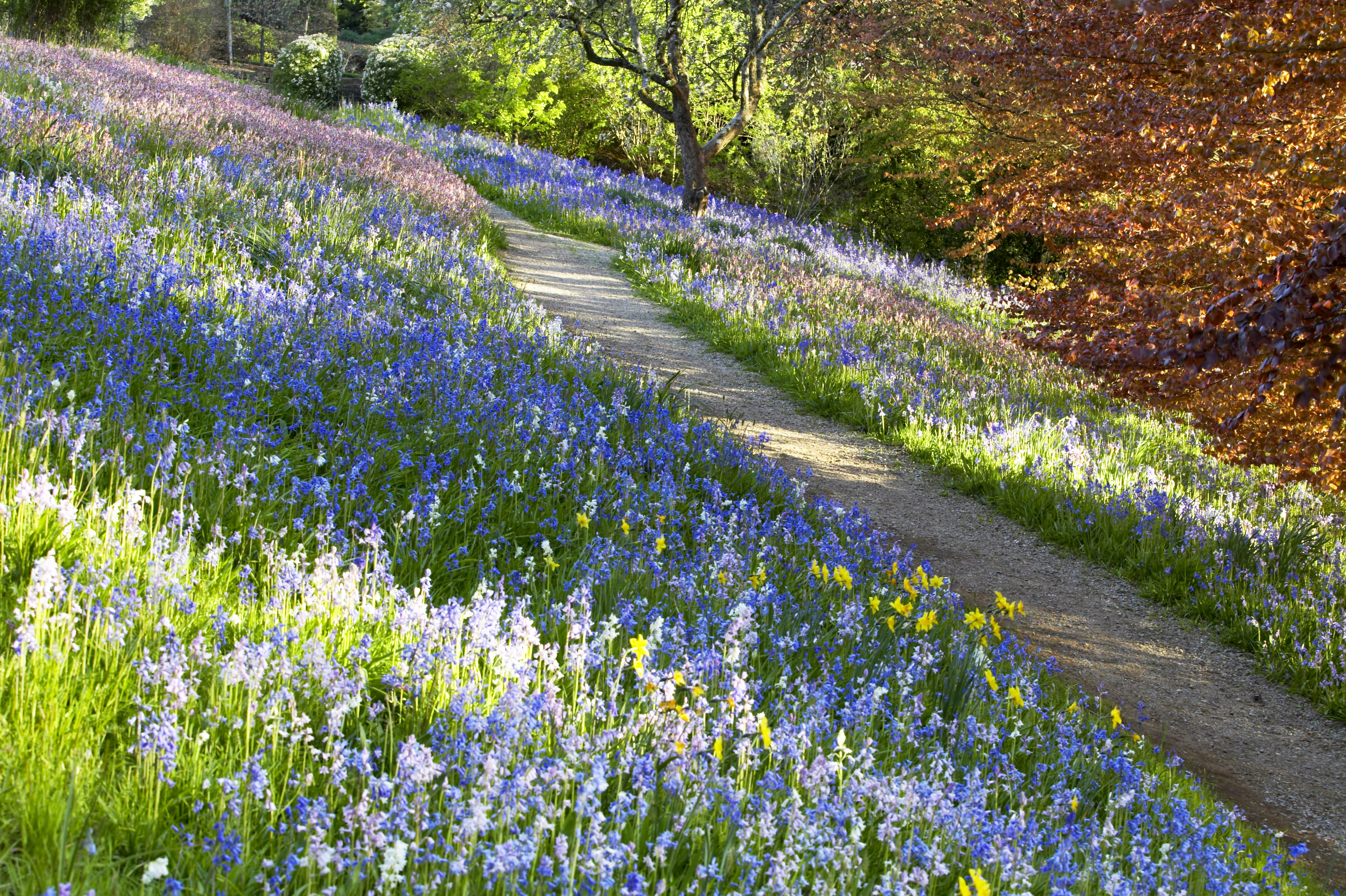
Cloudehill’s meadows were first planted out in the 1930s. They go all the way back to Jim Woolrich importing spring-flowering bulbs from Holland as part of setting up his flower farm. I’m sure they were planted out in blocks originally, the flowers to be picked, bunched and sold into Melbourne’s flower market. And this went on for some 40 years until Jim retired around 1970.
The only attention thereafter to his meadows, until our purchase in 1992, was his mate arriving on a grey Fergy tractor each February to slash the grass coming up though the bulbs to remove blackberries and seedling trees. This was exactly how the hay meadows of northern Europe were treated for thousands of years.
Meadows are often superb examples of deep-time human landscape management, which, over the eons, has resulted in intense biodiversity – indeed, places where biodiversity depends on an agricultural management system. And thinking of ancient needlework samplers and exquisite illustrations in ‘books of days’ of unicorns in flowery meadows, we have plenty of proof that northern Europe’s hay meadows have been famous for their wildflowers for at least 1,000 years. And though ours have not had the time required to gather the vast diversity those meadows routinely accumulated, after 50 years of annual slashing, the Cloudehill meadows are giving more than a hint of what this horticultural system is capable of.
Another example of this kind of biodiversity are the grasslands of pre-dispossession Victoria associated with Aboriginal mosaic burning. The curious thing is that these were almost always to be found in areas appropriate for trees to invade grass and take over.
Think of Victoria’s Western District. If left to its own devices, it would have been all forest and woodland, but it wasn’t.
Sir Thomas Mitchell, exploring in 1836, saw horizon to horizon grasslands interrupted only by belts of trees with scattered bulb clumps between. The trees were there to break up the landscape into a mosaic, essential to enable the cool burning needed to maintain the grass in the first place. These colossal grasslands, with their murrnong bulbs beneath, were entirely an artifact of an Aboriginal landscape management system designed to increase kangaroo populations.
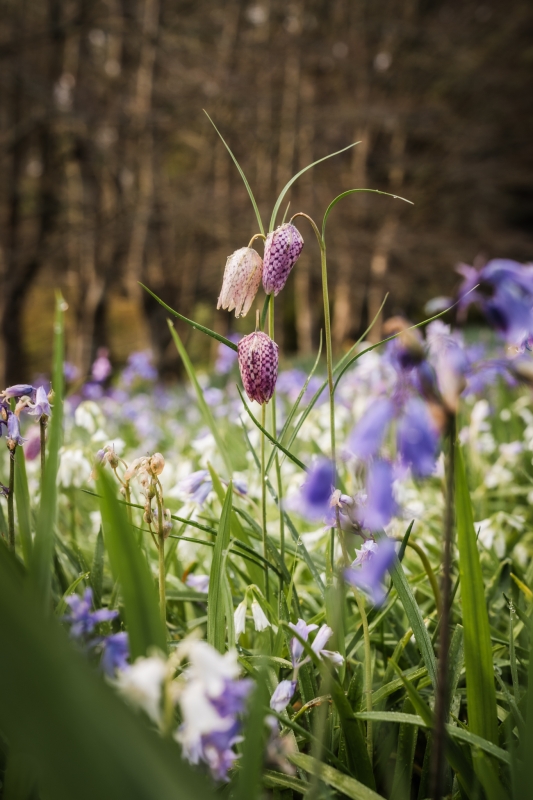
Most of the bulbs Jim planted into what now makes up Cloudehill’s spring meadows nearly 100 years ago have long faded away. However, those that have survived have naturalised into great sweeps of spring colour. Many thousands of inky-blue grape hyacinths flower in August with jonquils and other early narcissus popping through. Spanish bluebells commence in September and continue deep into October as the copper beech leaf out. And as spring gives way to summer, South African bulbs take over, such as ixias and sparaxis. Then, throughout most of summer, alstroemerias and montbretias shoot up firework spikes of tangerine and burnt orange through the masses of ethereal mauve-grey flowers of the Yorkshire fog grass.
A friend once told me he was thinking of writing a guide to the many magnificent ‘road verge weeds of the Dandenongs’. The last three species mentioned all qualify to be included. All run furiously and scatter seeds in every direction, yet despite such thuggish behaviour, they’re also stunning. Now the beauty of alstroemeria, montbretia and Yorkshire fog growing in a meadow is that their wanderings can easily be contained by perimeter paths and their penchant for flinging seeds everywhere nullified by slashing them to the ground in mid-February before they produce any.
So come along and enjoy the show and it doesn’t matter much which month.