

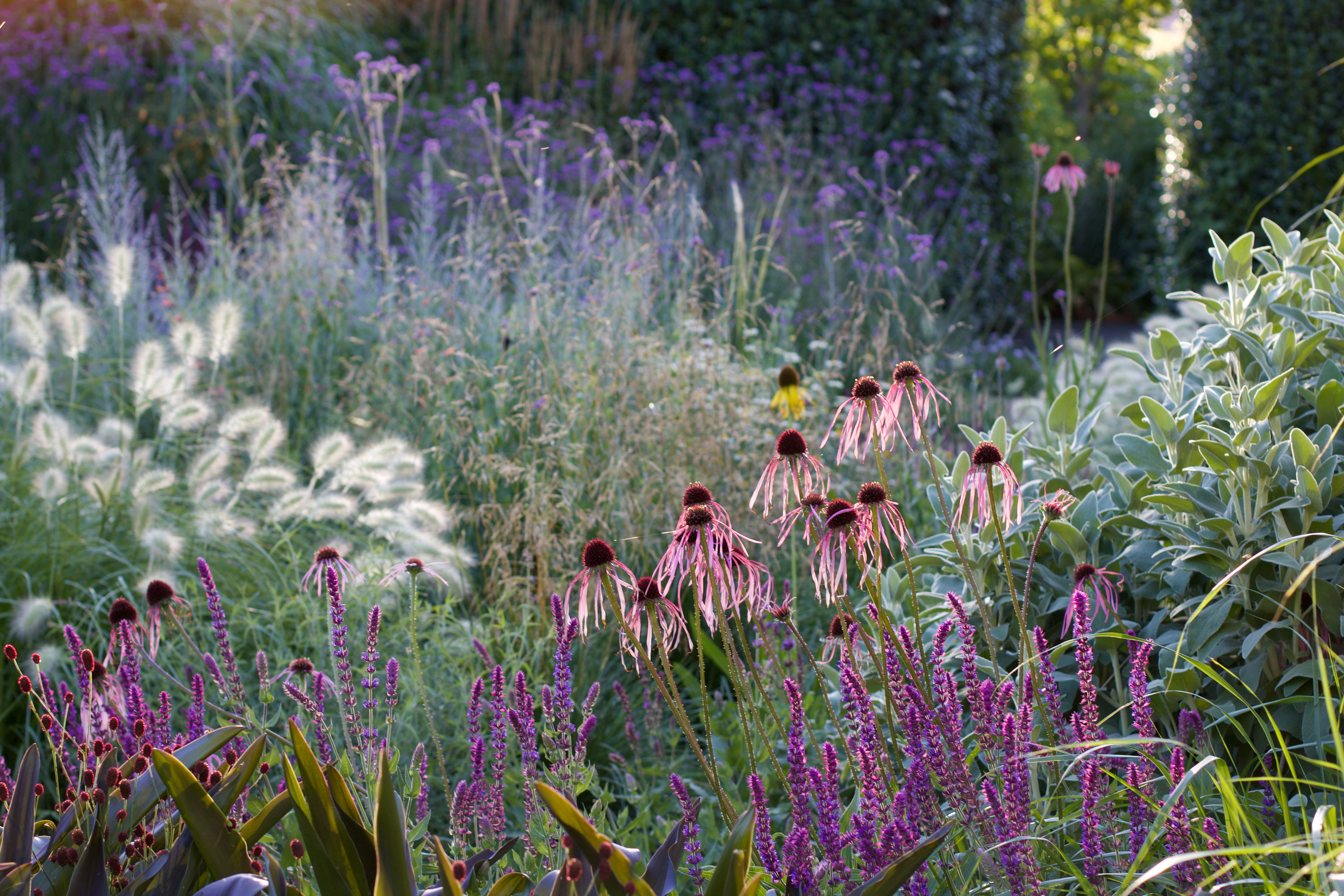
Within the Australian gardening community there is a long-standing debate about the role of native and exotic plants in our gardens, cities and landscapes. Nativists favour the planting of indigenous species, whereas many gardeners prefer ornamentals from abroad, perhaps reflecting the European gardening traditions brought here by generations of settlers and migrants.
Being a geographically isolated island country that was settled by Europeans relatively recently, Australia is in a unique position. Unlike many places with porous borders and complicated histories of the movement of people, plants and animals over the centuries, Australian flora and fauna have developed in isolation. The wonderful array of native species we have is truly different from plants in other parts of the world. Everything from trees to flowering shrubs and grasses has evolved in the harsh Australian climates to thrive through hot, dry summers, droughts, floods and the ancient, impoverished soils across our continent. It is clear that our native plants are well-suited and adapted to Australian conditions, but do they belong in our gardens? And can the gardener reconcile their vision of a created garden landscape with the palette of indigenous plants available today?
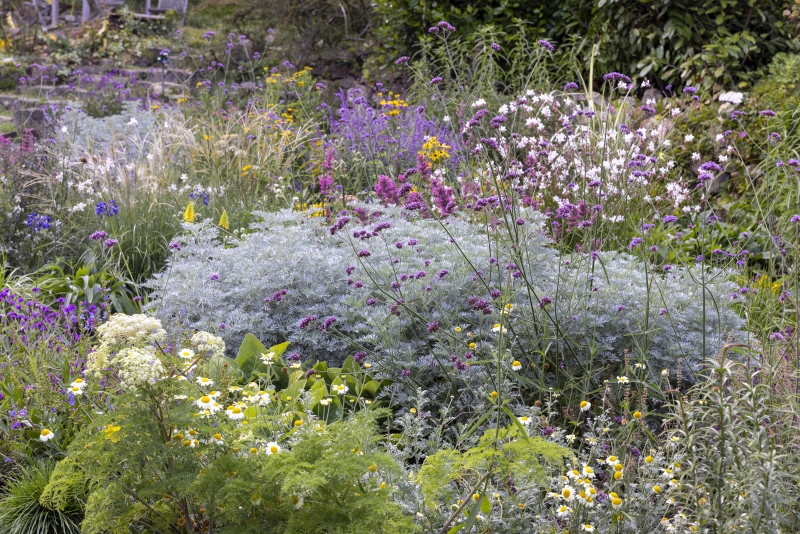
It is useful at this point to remind ourselves of what exactly a garden is. Distinct from the wild beauty of nature, the garden is very much a human creation. While humans have lived and influenced nature in its wild form for millennia, the garden is an entirely constructed natural environment pieced together by humans for both utilitarian and aesthetic purposes. The soil in our gardens is often human-made, far surpassing the fertility of the unimproved soil they were started on. We irrigate, fertilise and design, harnessing nature’s processes and modes of operation to create garden conditions beyond those which nature provides. Similarly, our garden plants, flowers and vegetables are human creations selected from their wild predecessors and refined by gardeners over the centuries to levels of beauty, tenderness and taste that nature alone could not achieve. Our herbs, flowers and heirloom vegetables have developed with gardeners and within the garden environments we have created. Our garden plants are part of our horticultural heritage and belong in our curated, highly fertile gardens.
Natives, on the other hand, are wild plants – well-adapted to our unique continent, beautiful in their own way, and, of course, worth conserving, protecting and enjoying. Often, it is the traits our native plants have developed through adaptation to our harsh conditions that limit their usefulness in our gardens.
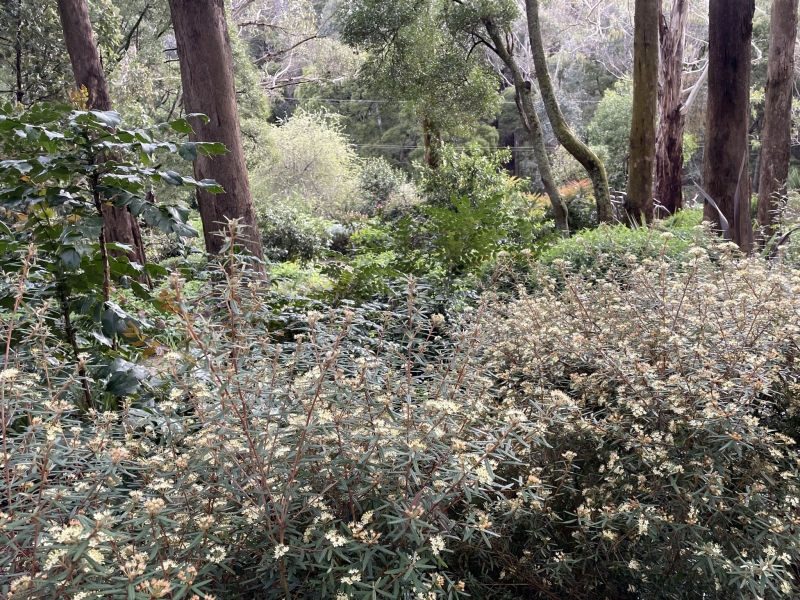
Many of our native flowering shrubs – prostanthera, westringia, correa, bossiaea and others – have evolved to flower in later winter or early spring. This is a useful trait in southern Australia, where winter rainfall is relatively reliable and summers are often dry, extended heatwaves. It makes sense for plants in these conditions to put on new growth, flower and seed during the cooler months and spend the summer conserving their energy and moisture until rain arrives and the temperature drops. Unfortunately, this limits their use in our curated gardens. Summer flower borders and mixed shrubberies might gain some form or structure from native Correa alba or neatly clipped westringias, but they will not add colour to the summer garden when planted amongst roses or flowering perennials. The native ‘Suggan Buggan’ poa is another example; a handsome, hardy grass with airy flower heads that would rival our cultivated miscanthus or calamagrostis species if only it flowered at the right time!
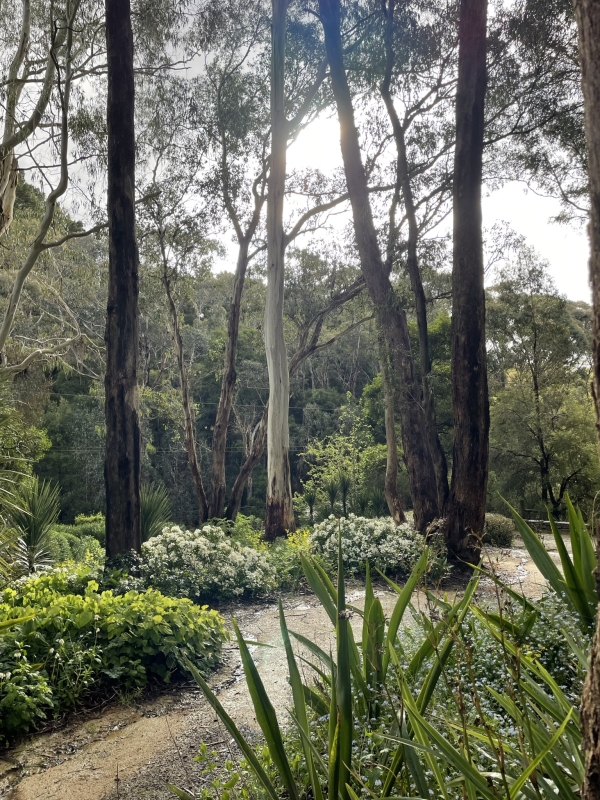
And dare I say it, eucalyptus, our national tree – tough, majestic and fantastic in their natural environment. But entirely unsuitable in a garden setting or even as street trees in an urban landscape. Their narrow leaves have evolved to hang down towards the ground to conserve moisture and hence produce poor quality shade when compared to an exotic, deciduous tree. Their flammability due to the essential oils in their leaves makes them dangerous in populated areas in a country increasingly prone to bushfires. Like many gardeners, I adore our eucalyptus forests, enjoy walks in the bush and passionately advocate for the conservation of our native flora. But I don’t consider them garden plants; I prefer imported tree species in our created gardens and landscapes.
It is the confusion of conservation ecology with gardening that often gives rise to the nativist trend in gardening. Undeniably, European settlement has damaged Australia’s ecology. Large areas of marginal land were cleared for grazing and food production that would have been better left as native vegetation. Small, highly fertile gardens produce abundant food for their size and the more food we grow in our backyards and gardens, the more of the Australian landscape can be dedicated to conservation rather than monocrop, industrial agriculture.
Other issues raised by the nativists take an anti-colonial tone, sometimes even bordering on patriotism, as if a garden exclusively made up of native plants is somehow a source of national pride.
The gardening traditions of Australia are largely derived from English and European practices, brought here by generations of immigrants, settlers and convicts.
Gardening, though, by its very nature, bridges geography, culture and borders. The plants we think of as English garden plants are rarely native to England and embody the cosmopolitan nature of the horticultural tradition as a whole. Apples, for example, would not exist as we know them if the ancient Silk Road had not facilitated the crossing of bitter crab apples from Siberia with similarly unpalatable fruit from western Europe.
Although plant hunters, botanists and collectors made use of the colonial era to search the world for new and fantastic horticultural treasures, the result is an enrichment of our gardening heritage. We should embrace the diversity and treasures that globalism has brought, just as we embrace the diversity of cuisine and fine art. The conquest of the new world brought tomatoes and basil to Italian cooking, just as it helped us create the modern strawberry or to breed a plethora of delightful new roses, salvias and coneflowers.
The diversity that comes from having plants sourced from all corners of the world, bred, selected and specifically tailored to human-made gardens, negates many of the advantages of using local, endemic species. When Europeans first began gardening here, of course, they tried to grow the plants that did well in their old countries. English gardens filled with poppies, delphiniums and bulbs really do not suit our Australian summers.
They tend to thrive until Christmas but shrivel in the heat of January. It is easy to see why people then considered native alternatives for their gardens.
But amongst the vast array of plants selected by gardeners over the centuries were also many species from equally arid, harsh environments. Plants from the Canary Islands, California, South Africa and the North American prairies do well here. Echinaceas, salvias, agastaches and sedums flower right through our Australian summers, replacing tender English selections without resorting to native species.
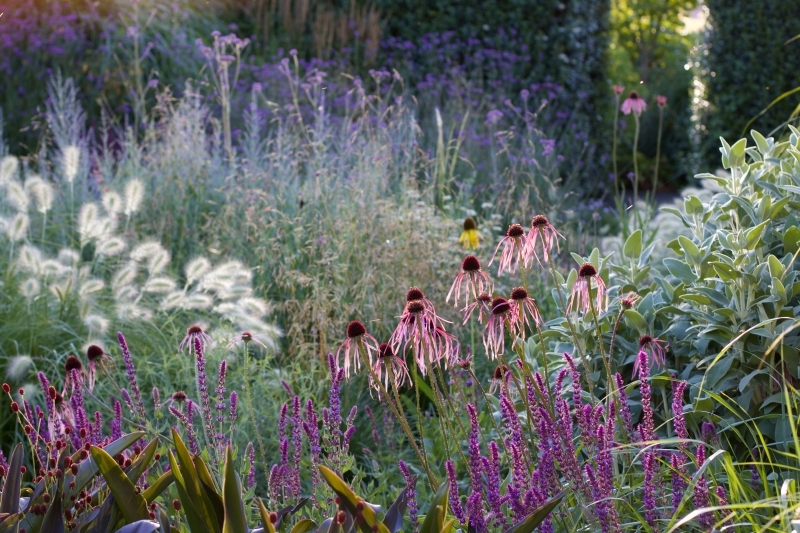
Even in the harshest of environments like the bush garden at St Erth, which has dry shade, terrible soil and sits under a canopy of eucalyptus trees, exotic species like arthropodiums from New Zealand and mahonias from Oregon grow happily next to native correas and mint bush. It doesn’t matter to the gardener where the plant is from, as long as it is planted in the right place in the garden. Our plant selections are chosen based on their garden worthiness, individual merits as plants, and suitability for the position. If we plant natives in our gardens, it is because we deem them good plants, not just because they are native.
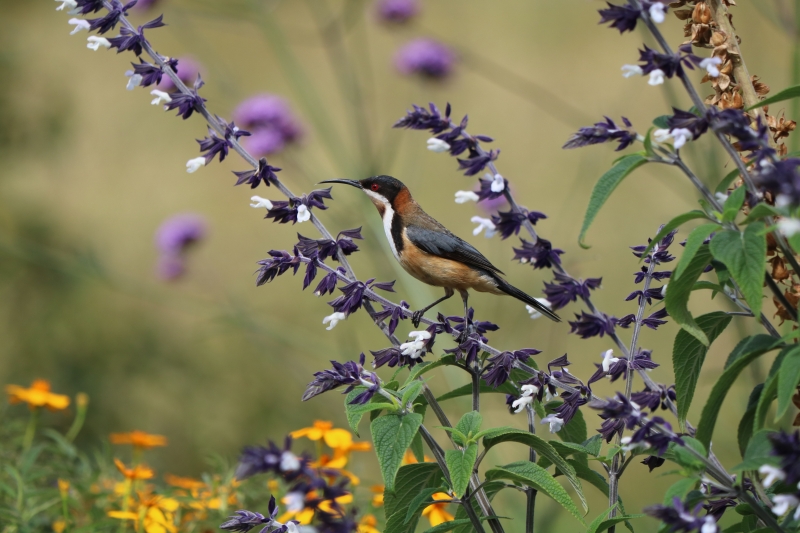
The more showy perennials that make up the herbaceous border also seem at home in a cultivated garden surrounded by native forest. Spinebills, New Holland Honey Eaters and other native birds feed on the flowering exotics while wombats venture into the garden at night and graze on the lawn and grasses. There is a refined, ordered beauty in the garden, distinct from the wild, untamed beauty of the surrounding bush. The native animals may move between them a little, but the gardener is best to mostly keep them separate, curating and cultivating the garden whilst admiring and protecting the forest.
The natives we do plant must meet the same criteria as our other plant selections and, of course, have a place amongst the wide diversity of our plant palette, useful for filling flowering gaps in spring or providing tough evergreen structure over summer.