

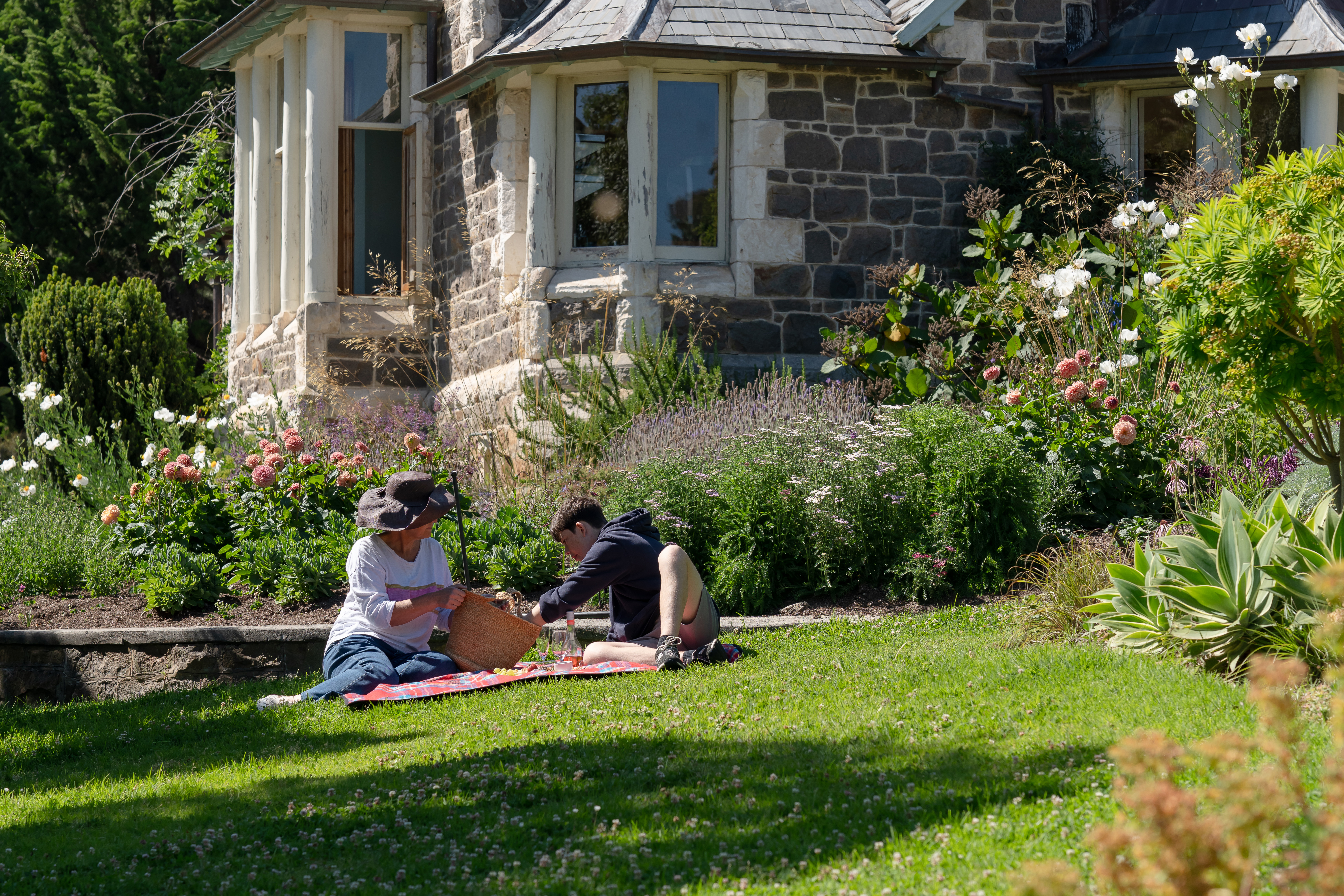
The highlight of any summer garden is its flower borders: carefully selected species of flowering plants that weave a tapestry of colour from late spring into autumn.
Heronswood is no different. At the front of the historic Heronswood house lies our herbaceous border, a collection of flowering perennials chosen for both their pastel colours and their form. Dahlias, salvias, achilleas and many others combine to form a harmonious, colourful picture. The grey foliage of artemisia and lamb’s ears blends the garden with the granite of the building on one side, while purples and blues draw the eye to the spectacular views of Port Phillip Bay.
When designing a herbaceous border, the many plant and colour options can be overwhelming. Each plant selection must justify its place, and its placement needs consideration of the plants around it and the rest of the planting scheme. A few simple guidelines can make the process easier.
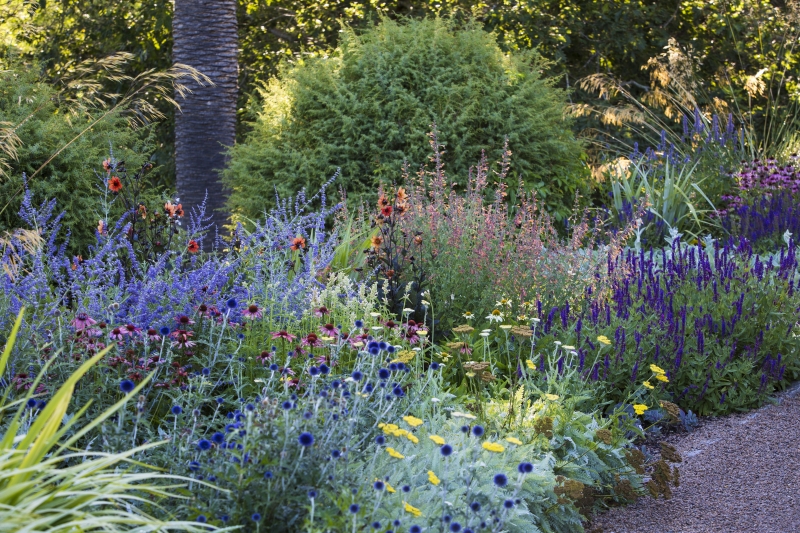
One of the most important considerations is timing. Each plant and each garden has specific flowering times. To create pleasing harmonies and ensure flowers peak at the same time, it’s useful to choose a season rather than mixing spring and summer flowers. Our long Aussie summers give the best opportunity for extended flowering. The vast selection of perennials now available has been chosen specifically to tolerate Australian conditions and our hot summers. There are many beautiful spring flowers, but we avoid the temptation to plant them in our summer borders and instead grow them in other areas.
When selecting plants for the flower garden, people often overlook their foliage. Most plants have green foliage, which can create a homogeneous planting if they’re too similar. To break up the green, we choose grey and sometimes purple plants. Artemisia, teucrium or grey yarrows are good options for creating contrast.
The plant’s form is another consideration. Small, strappy and broad-leaved plants can be mixed together to create an interesting display even without flowers.
Finally, flower colour needs careful thought and planning. While you can use all colours in a herbaceous border, it helps to choose a colour scheme from the start. In general, pastel colours are easier to mix and create more pleasing harmonies. Soft pinks, purples, peach, and cool blues combine well, while bright, fully saturated colours can be a shock and dominate, so use them sparingly, if at all.