

The Diggers Club Garden Shop in Adelaide sits in the centre of the Botanic Garden, on the Schomburgk Pavilion, overlooking The Mediterranean Garden.
This is a dynamic space, buzzing with energy, where people gather under the shade of a spreading Quercus canariensis, watching their children float leaf boats in the central rill, where tourists take selfies and plant enthusiasts draw inspiration. It wasn’t always this dynamic.
The first iteration of the Mediterranean Garden at the Adelaide Botanic Garden was created in response to the 2001–09 drought, which highlighted the need to garden in harmony with our local climate of hot, dry summers and low rainfall.
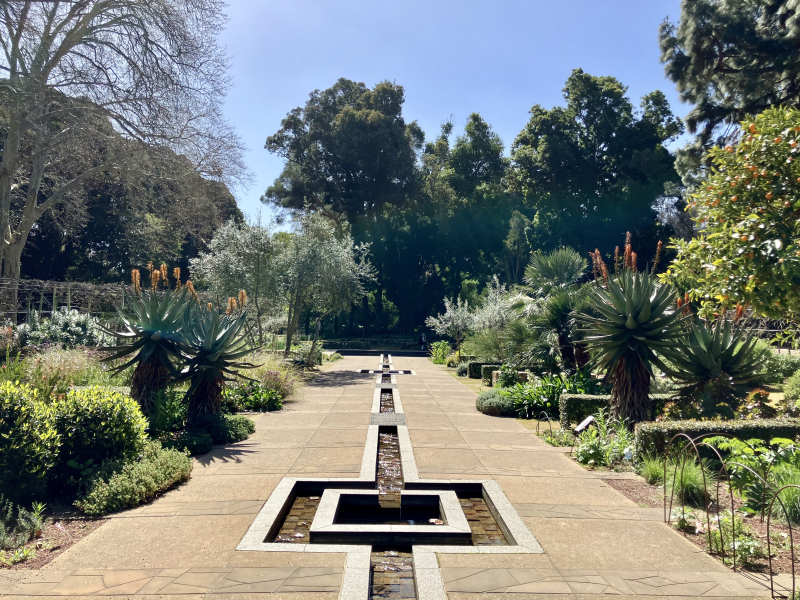
Designed primarily as a teaching garden, repeated hedges formed a series of small beds, with the spaces intended to change over time, showcasing seasonal change, plant lifecycles, and the diversity of plants adapted to summer-dry climates. These displays featured species from the five Mediterranean-climate regions of the world.
Larger beds contained a wider selection of suitable species to encourage South Australian gardeners to explore climate-appropriate plant choices rather than relying on ideas from cool temperate gardens. A rill running through the garden emphasised the importance of water as a limited and essential resource, reinforcing the need to understand how plants use and conserve water.
As a teaching garden, shade trees were deliberately excluded from the main space. This ensured the plants could be seen in conditions that revealed their adaptations to hot, dry climates, without the altered growing conditions that tree shade would create.
By June 2022, the garden had grown tired and somewhat static, so ABG management decided it needed an upgrade. Members of the SA branch of the Mediterranean Garden Society (SAMGS) who had maintained a keen interest in the garden felt that it was possible to rejuvenate it in a way that retained the best of the existing structure and plant selections while introducing exciting, creative and new ideas; all within the principles of climate-compatible gardening for Mediterranean climate zones in an increasingly hot and dry climate.
It was felt that the message about climate-compatible gardening should be less didactic and more seductive; inspirational rather than overtly instructive.
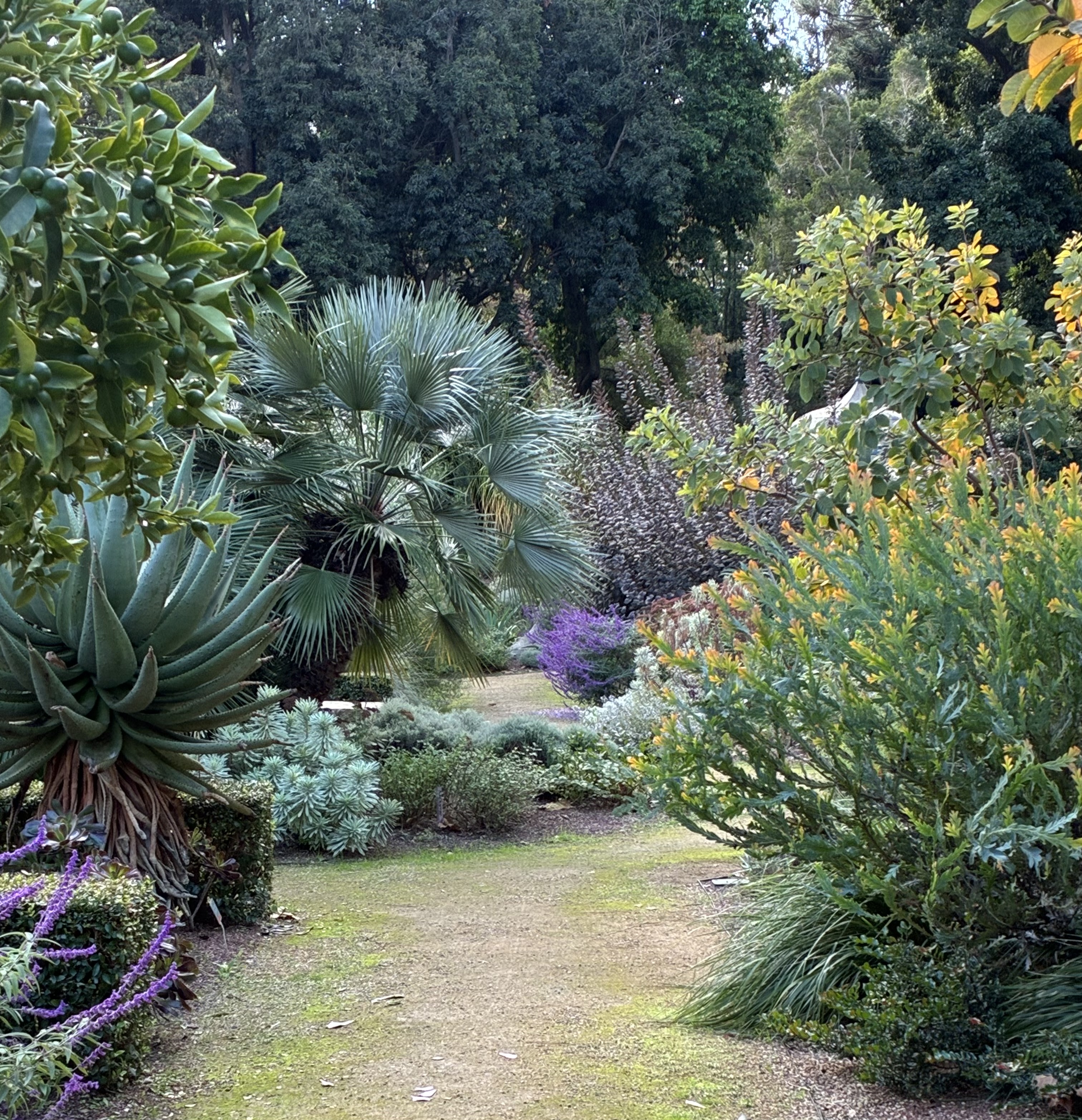
The focus would be on summer dry plants from the five Mediterranean climate zones, incorporating more South Australian plants and including plants from other climate zones that have adapted to SA climatic conditions (with the proviso that they be non-weedy). A nd crucially, the plants would not be segregated by zone of origin, but would work together to create beautiful (and achievable) garden vignettes.
Most landscape projects of this size have a long gestation period. In the case of the Med Garden rejuvenation, a core group of SAMGS members – garden designers, landscapers and horticulturists, including Jill Woodlands, manager of The Diggers Club Garden Shop – worked in close collaboration with Adelaide Botanic Garden staff within a short time frame, in a space that would be open to the public at all times.
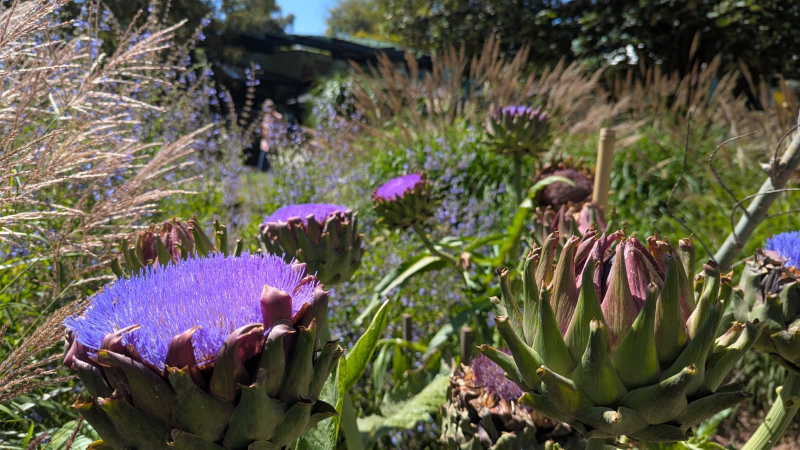
The result is a garden that feels uniquely South Australian while drawing on the plant diversity of Mediterranean-climate regions around the world. The aim was to create a garden that is distinctively South Australian – not because every plant is indigenous, but because every plant has earned its place by coping with our conditions. Mediterranean climate plants work well together because, on the whole, they have developed in response to similar conditions in their countries of origin.
The materials used throughout the garden are sourced from South Australia. The sculptural sandstone seats have been built from donated local stone. Paths of locally sourced quartzite toppings allow rainwater to soak into the soil rather than running off hard surfaces. Like every home garden, this site has its own challenges. Some areas are shadier than others. Some drain poorly, while others dry rapidly. These are the same issues home gardeners face.
Above all, we hope this garden will entice, seduce and occasionally provoke. We are not prescribing style or taste. We are not trying to create something that appeals to everyone – that would be impossible. Instead, we want visitors to leave with fresh ideas and to question familiar assumptions about what can be planted together. Unexpected combinations of colour, texture, form and scale can create gardens that are both beautiful and tough.
We are simply saying, have a go. Plants grow, mature, self-seed, decline and die. Change is the very essence of gardening, and so too are experimentation and occasional failure.