

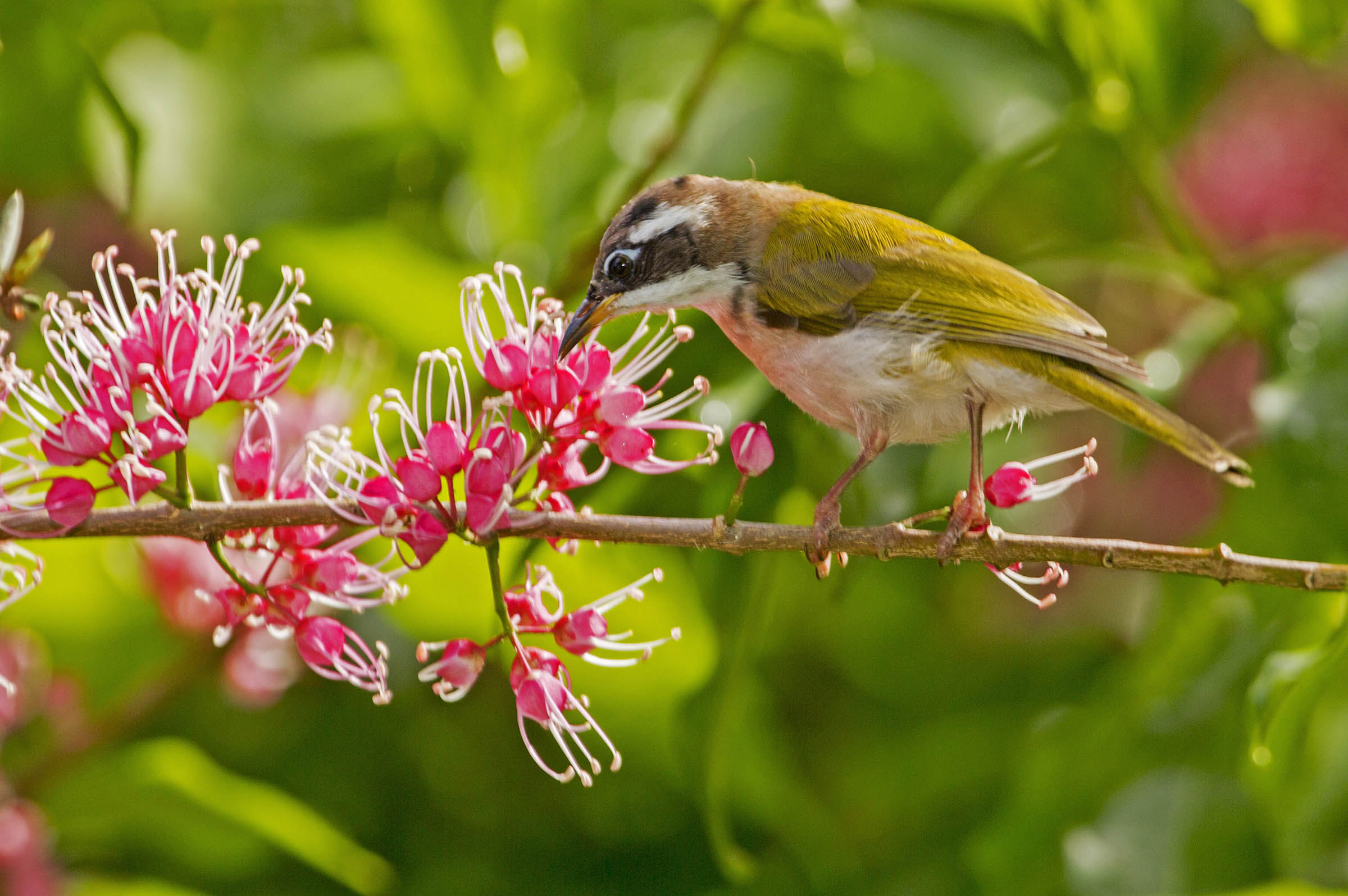
It’s often said that only native plants should be grown in a garden that’s specifically designed to attract birds, and it’s certainly important to give native species priority. Many birds prefer the nectar, seeds and fruits of the indigenous plants with which they are familiar, but birds have adapted to a changing world and many have come to appreciate what exotic plants have to offer.
The key to attracting birds to your garden is to include as great a diversity of plants as possible, from trees and shrubs to low-growing perennials, ground cover species and grasses to ensure that there’s something to capture the attention of every avian species in the neighbourhood.
A bird-friendly garden should include not only plants that provide food for birds but also features that our feathered friends require for their survival. When selecting the most appropriate plants, it’s important to choose more than one characteristic that will appeal to birds, such as shrubs or trees that produce both nectar-laden flowers as well as seeds or fruits that birds will find irresistible. Good choices are plants that, in addition to food, provide nesting material (perhaps in the form of the fine bark that many species utilise) or that will develop dense foliage to provide small birds with protection from predators and inclement weather. Plants that are routinely visited by insects are also essential as they attract the attention of a wide range of insectivorous birds when they realise that their favourite prey has arrived on the scene.
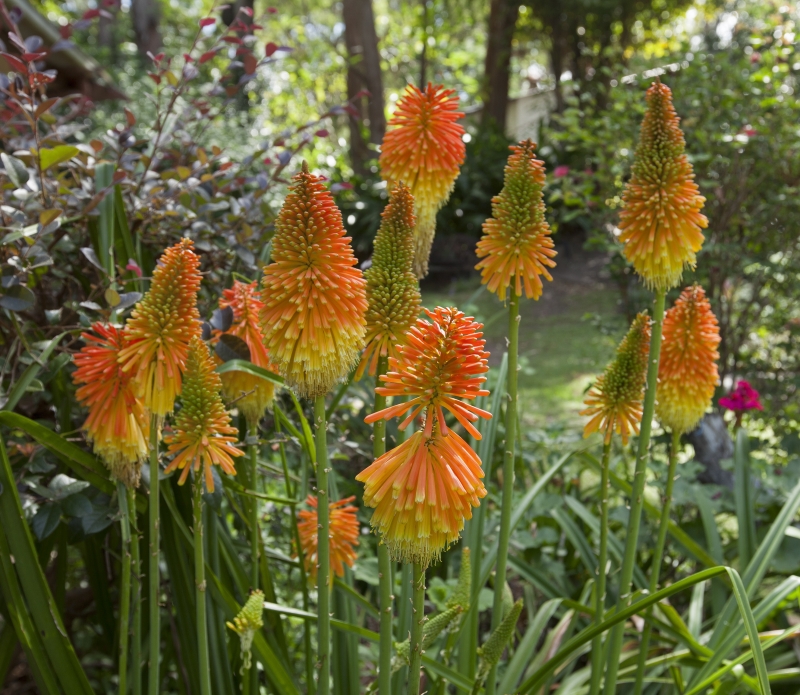
Kniphofia species
Common name: Red Hot Poker
Kniphofia are hardy, drought-tolerant and low-maintenance perennials with long grass-like leaves that develop into large clumps over time.
Some species produce tall spikes of flowers in fiery shades of red and orange that set the garden ablaze with colour, while others have yellow or lime green flowers that are just as attractive. The largest species reach a height of around 1.5 metres and can develop into a metre-wide clump, but others grow to merely 60cm in height and form a clump that’s little more than 50cm wide.
Wattle birds, sunbirds and many species of honeyeaters enthusiastically feed on the nectar that the plants’ tubular flowers produce.
With other birds preying on the pollinating insects that also find the flowers irresistible, Kniphofia are a welcome addition to any garden that’s designed to attract birds.
Xanthostemon chrysanthus
Common name: Golden Penda
The lovely Golden Penda is an Australian native that, in cultivation, reaches a height of around 6 metres. It has glossy green leaves and, in summer and autumn, it produces large clusters of fluffy bright yellow flowers that both insects and nectar-feeding birds, including friarbirds, blue-faced honeyeaters, and rainbow lorikeets, find simply irresistible. As a bonus, its dense foliage provides birds with shelter as well as a place to roost and nest.
The cultivar ‘Fairhill Gold’ is a lower growing form that attains a height of 3–4 metres, while the diminutive ‘Little Goldie’, which reaches a height of merely 1.5 metres, is suitable for the smallest of gardens.
Calliandra
Common names: Fairy Duster, Pompom Bush
The varied species of Calliandra, with their attractive fern-like foliage, grow to a height
of around two metres and produce masses of fluffy flowers that range from white to pink and red. Spring and summer are the main flowering season of these attractive shrubs
but they’ll enthusiastically burst into bloom at any time of the year, particularly after rain. Bees, butterflies and other pollinating insects that visit the flowers attract insectivorous birds, while each shrub’s proliferation of delicate blooms also attracts a range of nectar-eating birds, including white-throated, brown, blue-faced and Lewin’s honeyeaters.
Melicope rubra
Common name: Corkwood
This evergreen Australian native reaches a height of some 6 metres. Its foliage provides an important food source for the larvae
of the Ulysses butterfly and the clusters of bright pink flowers that this attractive tree produces in summer months attract insects that are a major component of the diet of many birds. The tree’s flowers, which also attract nectar-feeding birds, such as lorikeets and honeyeaters, are followed by small fruits that offer a welcome feast for figbirds and other seed-eating species.
Salvia farinacea
Common name: Mealy Sage
There are hundreds of species of Salvia and S. farinacea and its many cultivars are among the best of them all. It’s a herbaceous perennial with aromatic foliage that grows to a height of around 70cm and produces imposing spikes of small blue or mauve flowers. Although it’s often grown as an annual it will survive for several years in a frost-free climate and can be mass planted to create an impressive floral display during spring and summer months.
Its flowers attract small nectar-feeding birds, such as eastern spinebills, but with its blooms also capturing the attention of butterflies, bees and many other pollinators insectivorous birds will never be far away.
Add a bird bath to your garden and, with plants that provide everything birds need to survive, some of Australia’s most beautiful wildlife will happily call your garden home.