

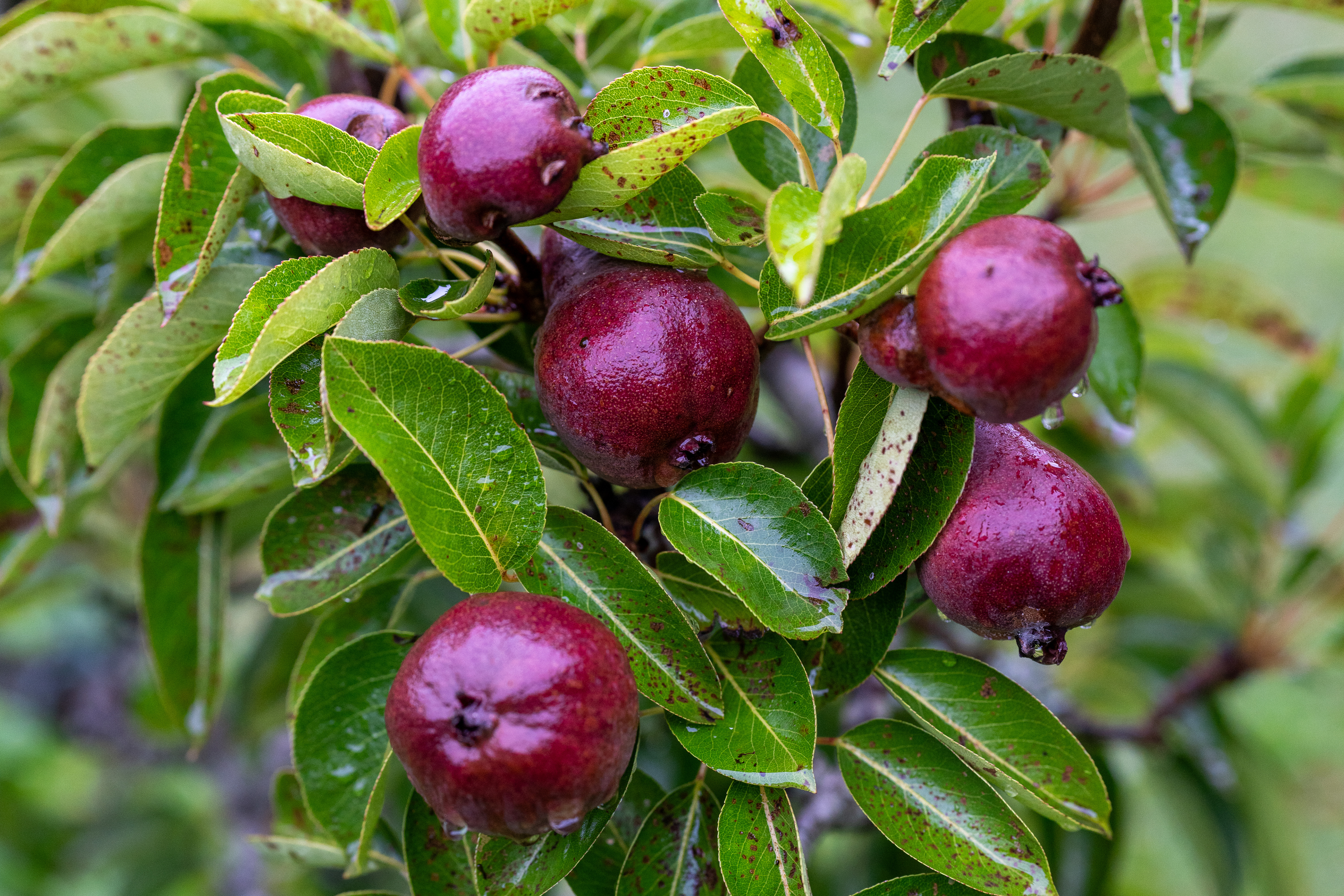
The kitchen garden at St Erth is perhaps my favourite part of all of the Diggers gardens. Wandering through the espalier orchard and food forest, or tending the vegetable beds, I am still in awe at the beauty and abundance that springs from the soil.
One of the keys to a productive, sustainable food garden like this is the careful and deliberate grouping of plants. Diversity and variety in the food garden ensure a healthy population of beneficial insect life, native birds and of course the soil biology which makes all of the abundance possible. Beyond the common practice of companion planting, each part of the kitchen garden is populated with plants which go together in their growth habit, their life cycle and their relationship to the plants around them.
Our espalier orchard, made up of heirloom apples, pears and quinces, thrives with dwarf comfrey growing as a ground cover underneath. The comfrey covers the soil, acting as a living mulch and providing bulk green material for our compost heap when we cut it back. The flowers are also excellent bee fodder and help attract bees and other pollinating insects each spring when our fruit trees are flowering and setting fruit.
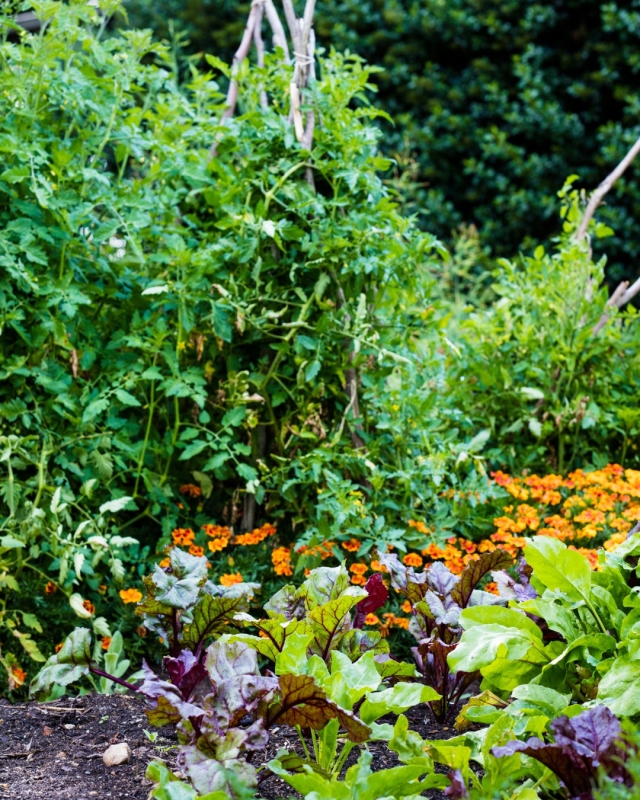
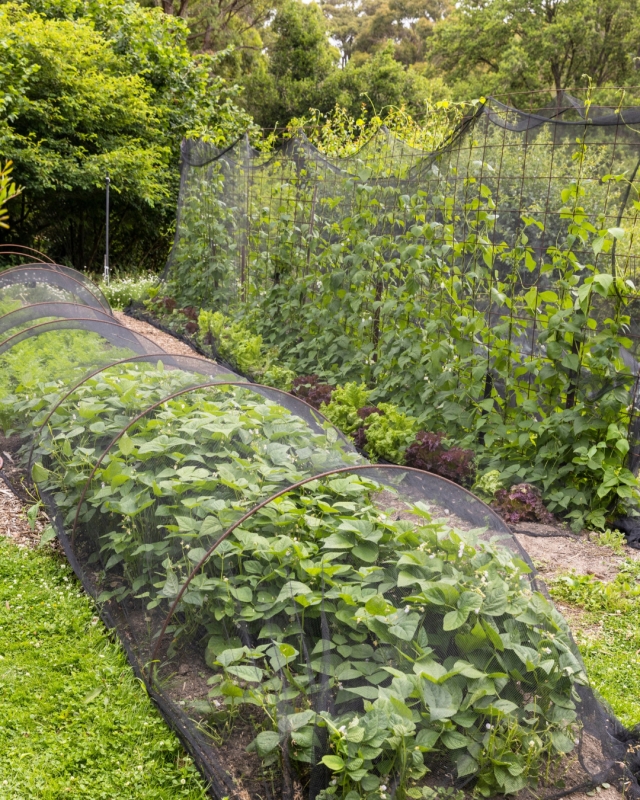
Annual crops of vegetables, flowers and soft herbs are grown in the vegetable beds. Regular cultivation, full sun and a high fertility soil provide the best growing conditions for annuals. St Erth’s location, surrounded by the Wombat State Forest, means we also have to contend with wildlife which will happily feast on our vegetables if given the chance. Our dedicated vegetable beds make netting easier, whether we are protecting crops from wombats, wallaby or cockatoos.
The food forest provides a perfect example of mixed species growing in a created ecosystem. The taller ‘canopy’ plants include hazelnuts, mulberries and other fruit trees. Beneath the canopy a selection of perennial food crops enjoy the shelter provided by the canopy and make use of vertical space. Currants, berries, rhubarb and herbs cover the ground layer forming an edible tapestry which not only provides delicious harvests but continually improves the soil.